Project
introduction
Our project explores bio-based, compostable and lightweight architectural shell structures as temporary, ecologically integrated systems while combining digital fabrication and skeletal construction. Working primarily with animal-derived waste materials and by-products such as wool, gelantin, bone glue and sawdust, the research explores how these bioplastic-composites can generate temporary spatial structures situated between object, experiment, and architecture.
Experimental form-finding processes play a crucial role in translating material behavior, structural performance, and spatial characteristics of these composites. Rather than resisting transformation, the project embraces deformation and decay as integral aspects of the lifecycle. Material composition is strategically distributed to situated requirements, creating differentiated material systems that evolve over time and eventually reintegrate into natural ecological cycles through biodegradability.
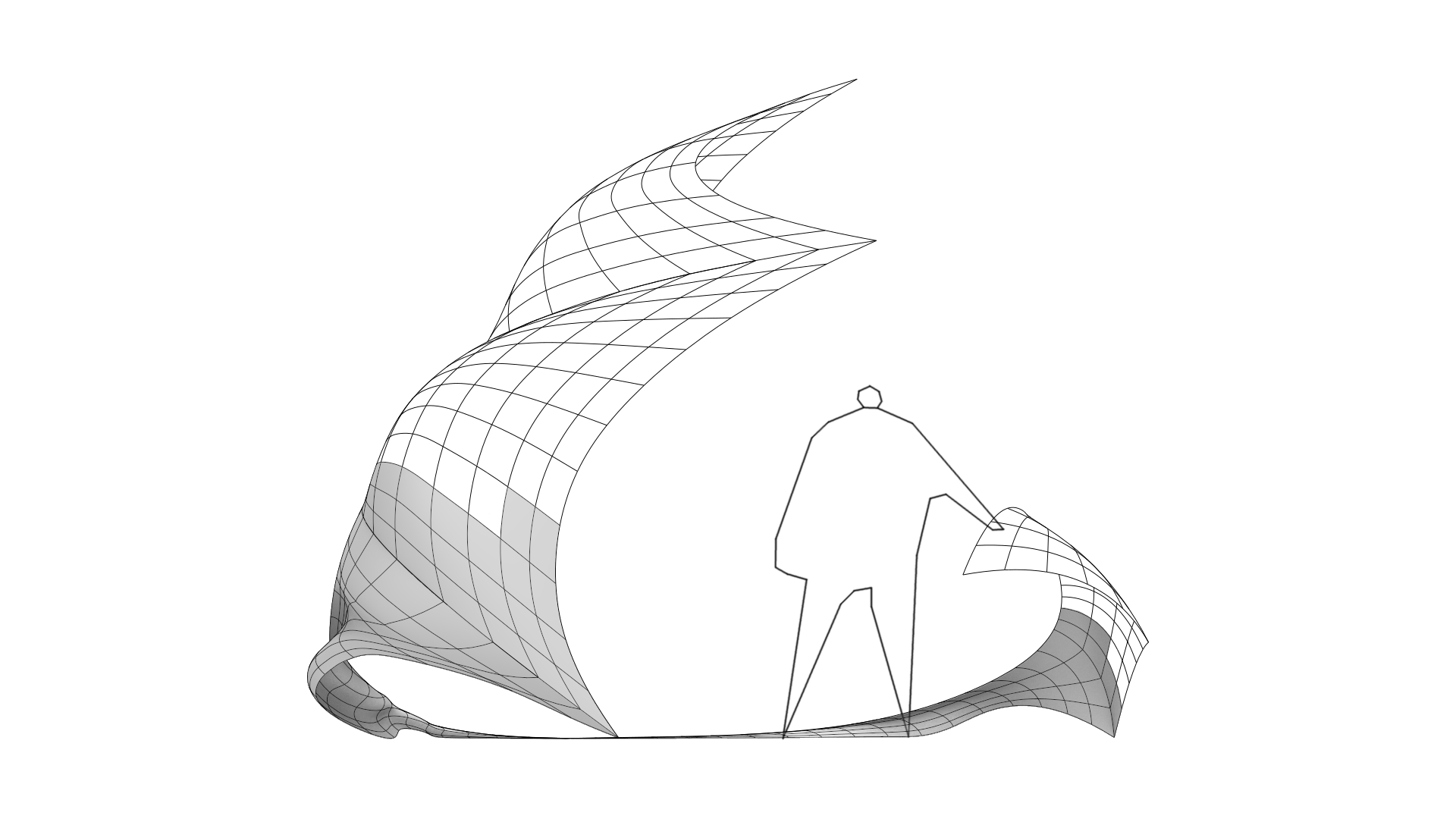
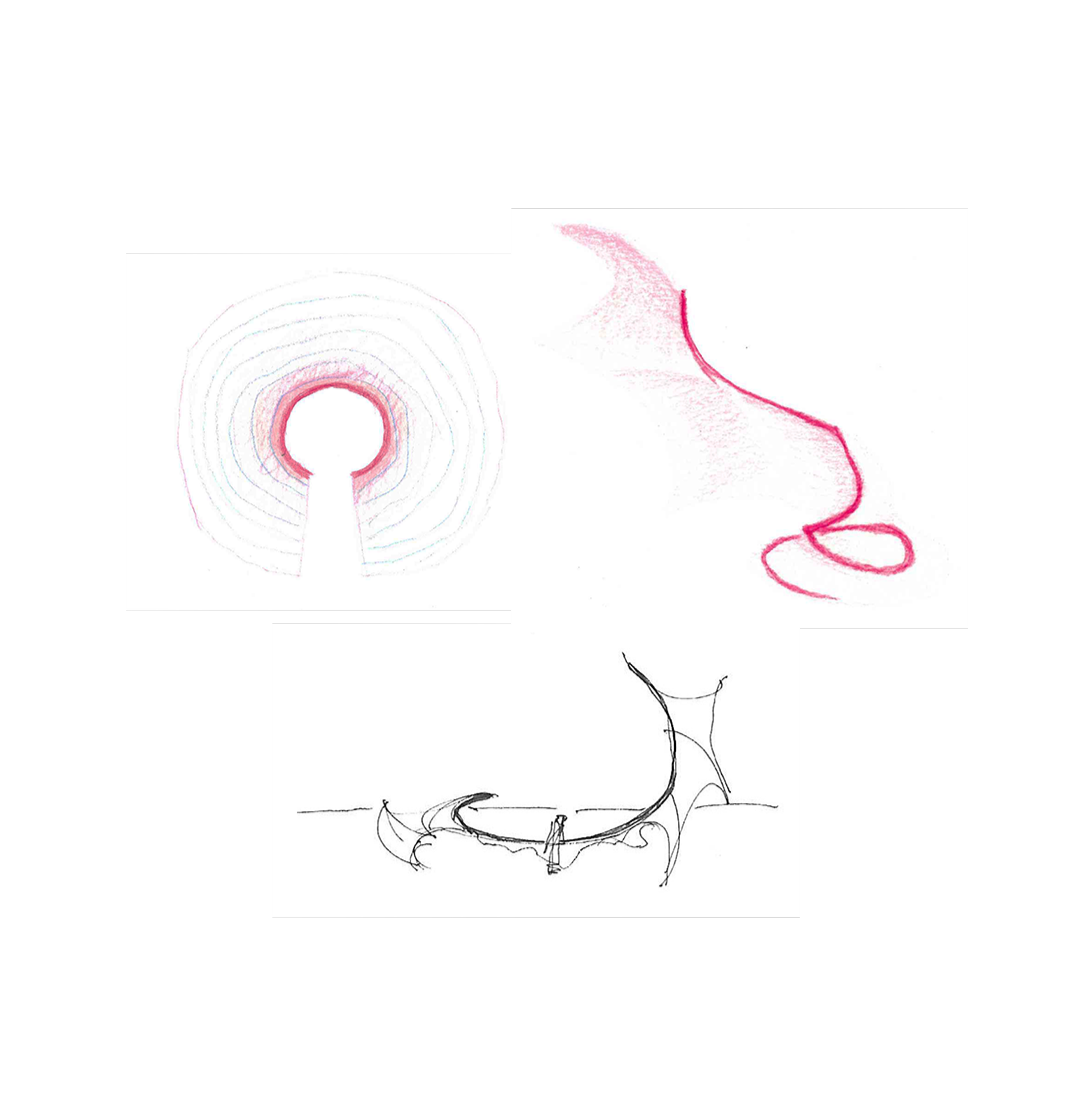
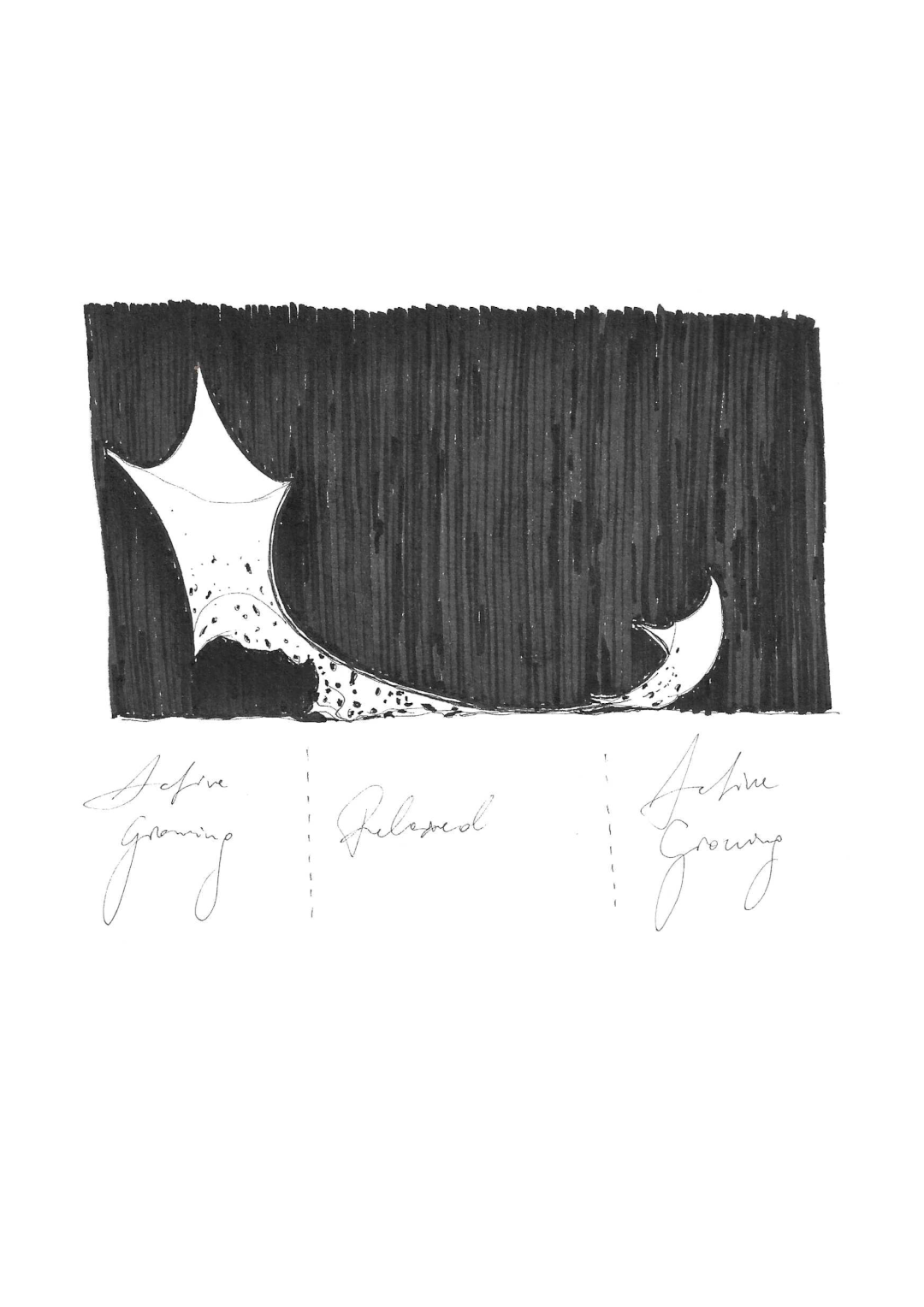
As if the ground itself has begun to stretch,
a spine leans into the air transforming into a wing.
It feels like the peak of a movement,
a muscle contracting,
a weave like muscle fibers drawn close together,
holding tension just before release.
Closer to the ground the forms surrender to gravity,
soft as a limb at rest.
The wing wraps around,
not enclosing,
simply leaning close.
Standing within the arc of a living gesture,
a body learning to lift itself from the earth.
MATERIALIZATION
Our proposal investigates materialization through the development of fully biodegradable, bio-based composites and differentiated material matrices within an architectural shell structure. The project explores how varying densities, thicknesses, fiber orientations, and composite mixtures can be strategically distributed according to structural and spatial requirements.
Combining wool, bone glue, wood, and organic binders, the structure operates as a graded material system rather than a homogeneous construction. This localized approach enables specific material performances across the shell while maintaining full compostability at the end of the structure’s lifecycle. The project therefore examines how digital fabrication can support adaptive and materially efficient forms of architectural organization.
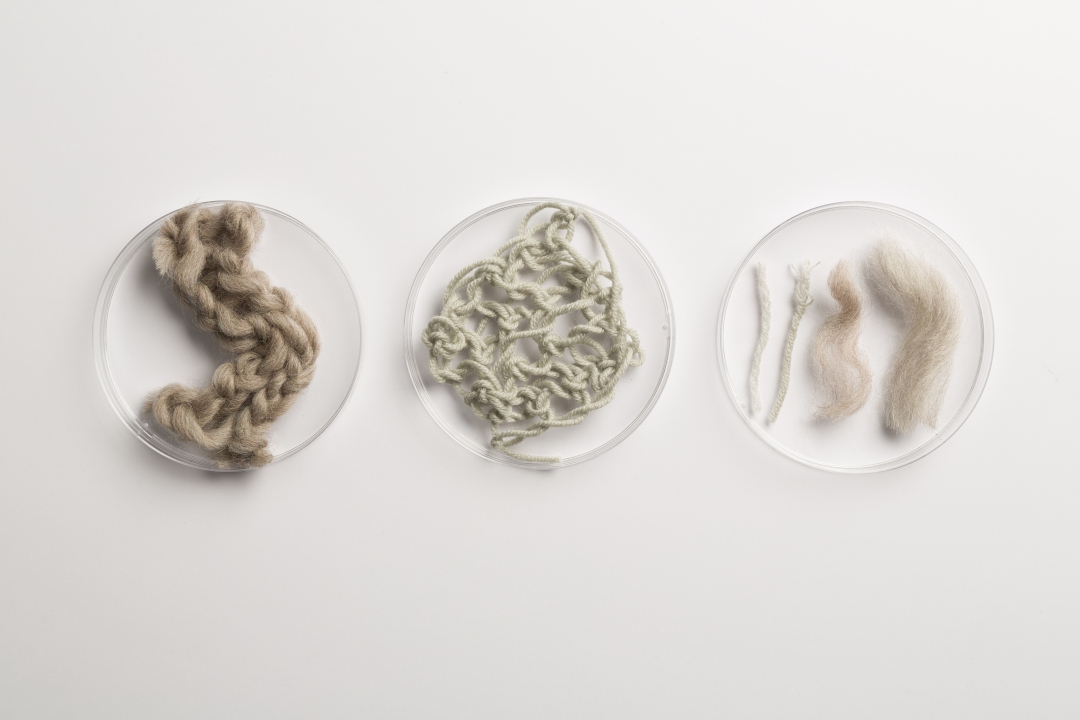
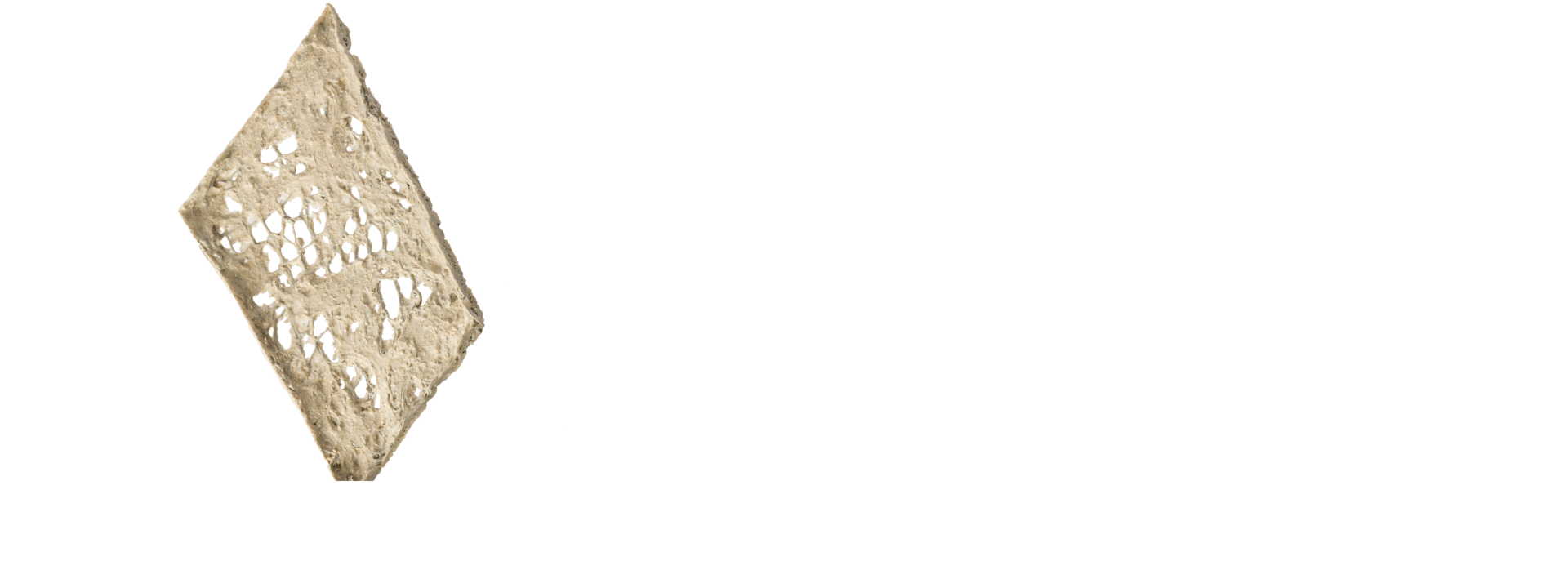
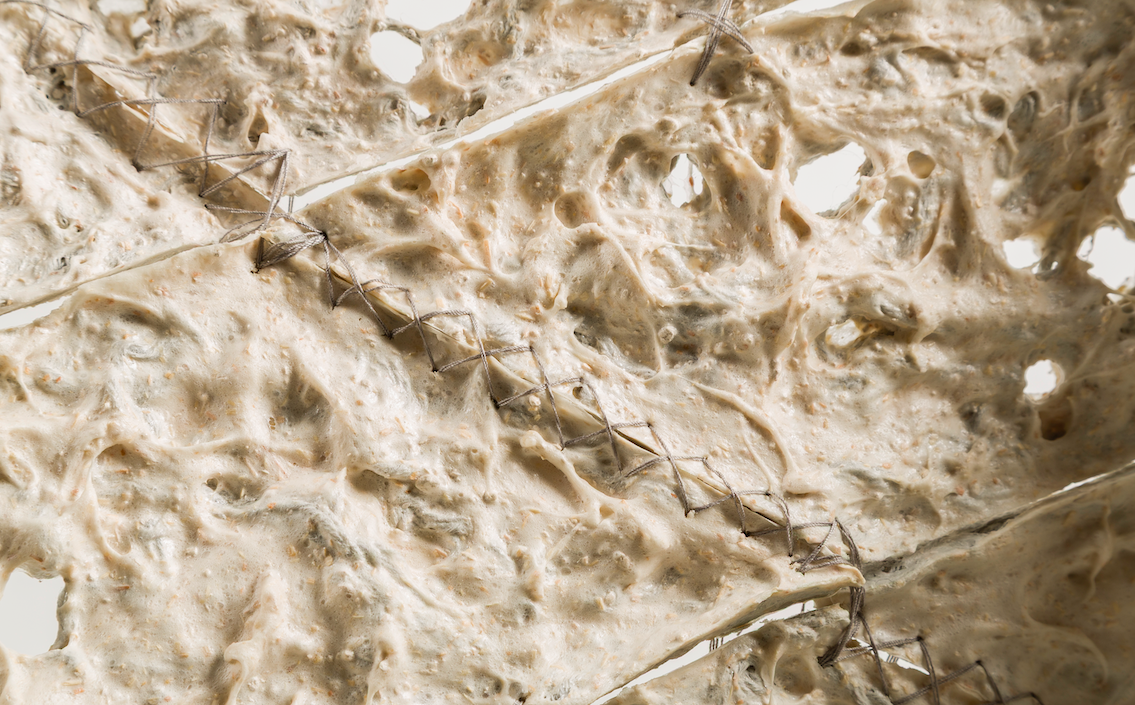
Wool yarn acts as an absorptive fiber matrix within the composite system, allowing the applied materials to penetrate and bind to the fibrous structure. Used as a crocheted substructure, the wool forms the base layer of both the panels and the spine elements. In this role, it functions as reinforcement, providing the necessary tensile strength to stabilize the structure and prevent cracking, breaking, or tearing within the composite material.
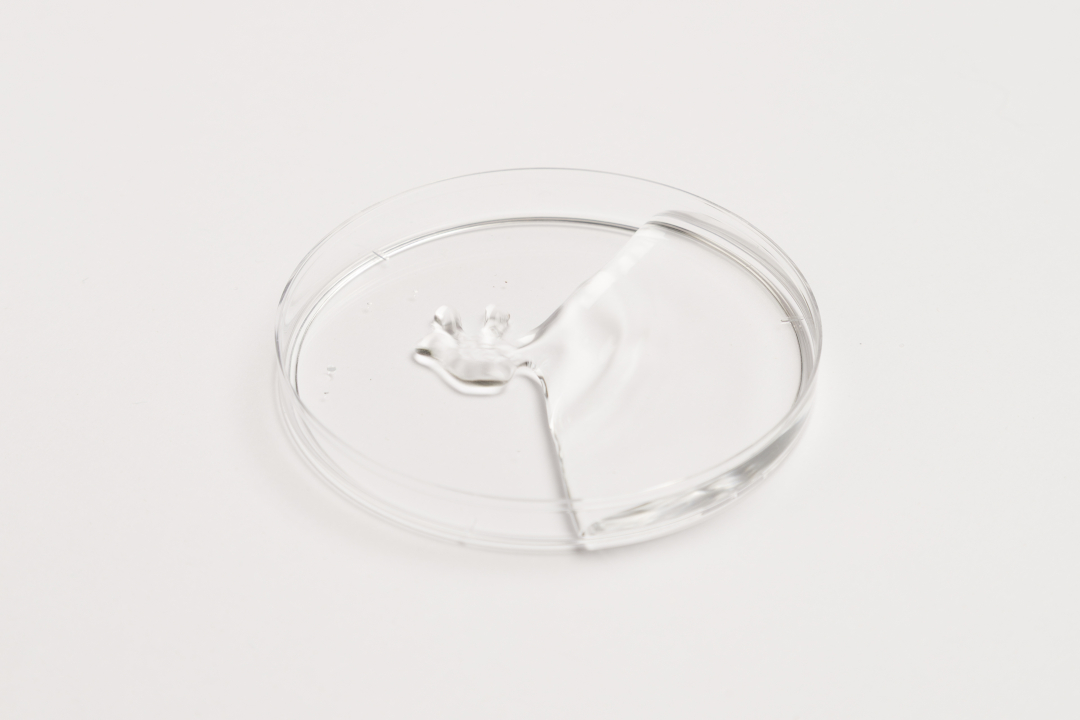
Water plays a crucial role in the preparation of the gelatin mixture used for the panels. During the soaking process, it hydrates the gelatin, allowing the protein structure to swell and dissolve evenly during heating. Water directly influences the viscosity, flexibility, and drying behavior of the composite, shaping the final material properties of the panels.
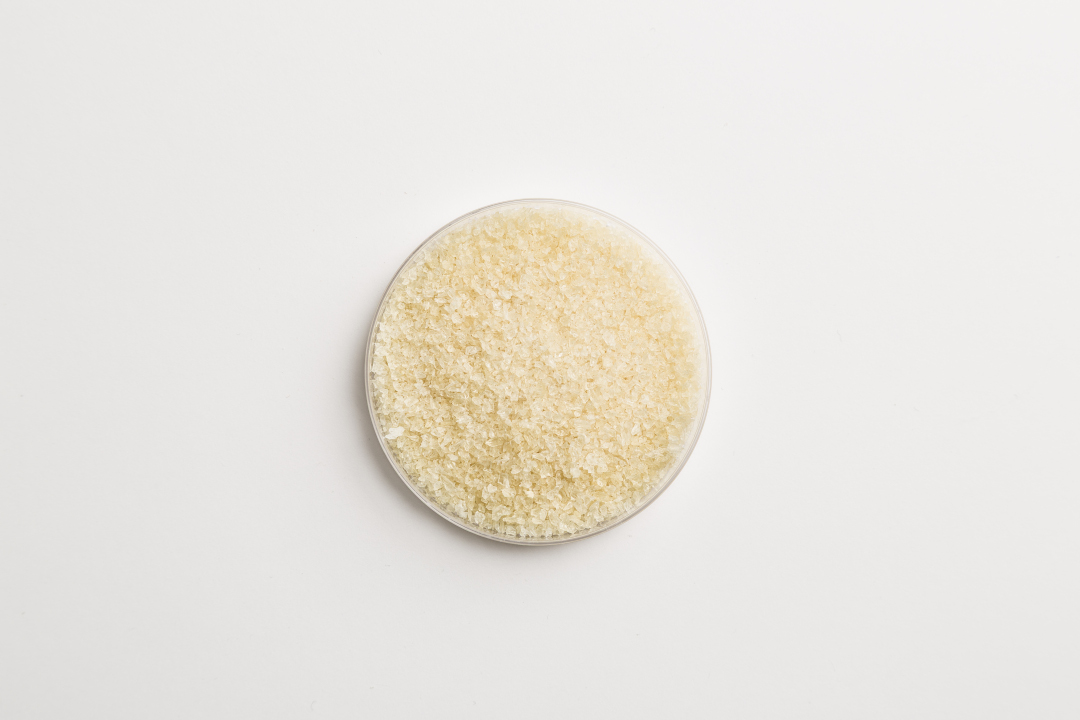
Gelatin functions as the primary binding agent within the panel system. Derived from animal-based collagen, it binds and stiffens the wool reinforcement while contributing to the panels’ surface texture, translucency, and structural behavior. Depending on its concentration and water content, the gelatin influences the flexibility, brittleness, and shrinkage of the material. Due to its sensitivity to humidity and temperature, the panels remain environmentally responsive and gradually transform over time.
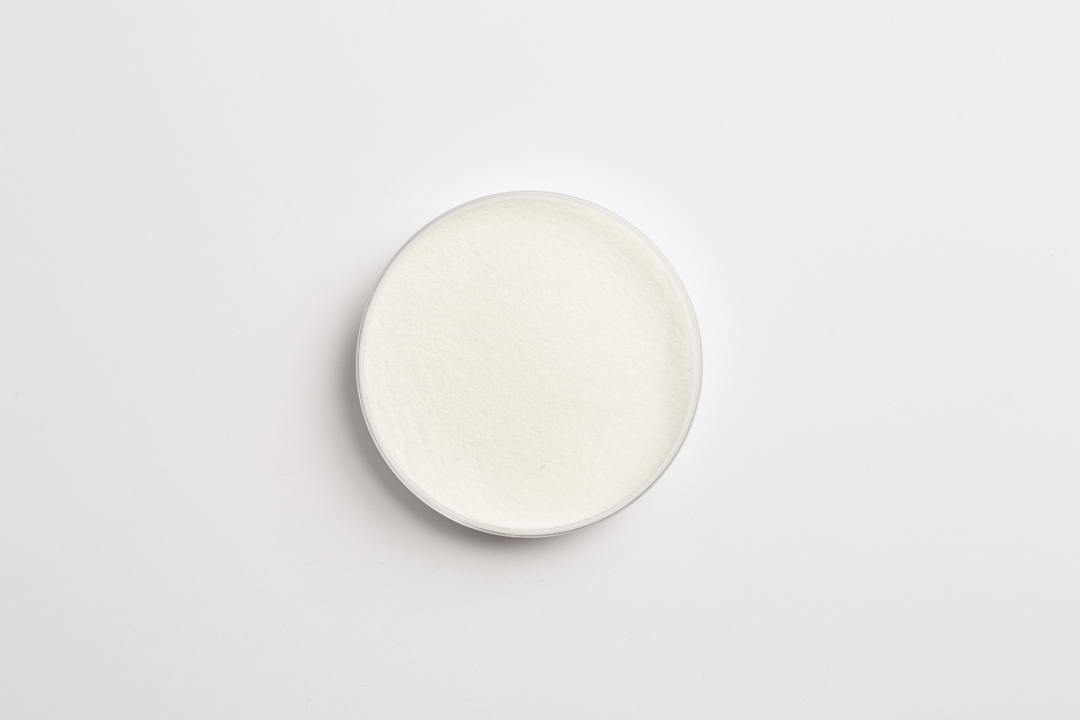
Xanthan gum functions as a natural thickening and stabilizing agent within the composite mixture. When combined with water, it increases viscosity and improves the distribution of the material components, preventing separation during application and drying.
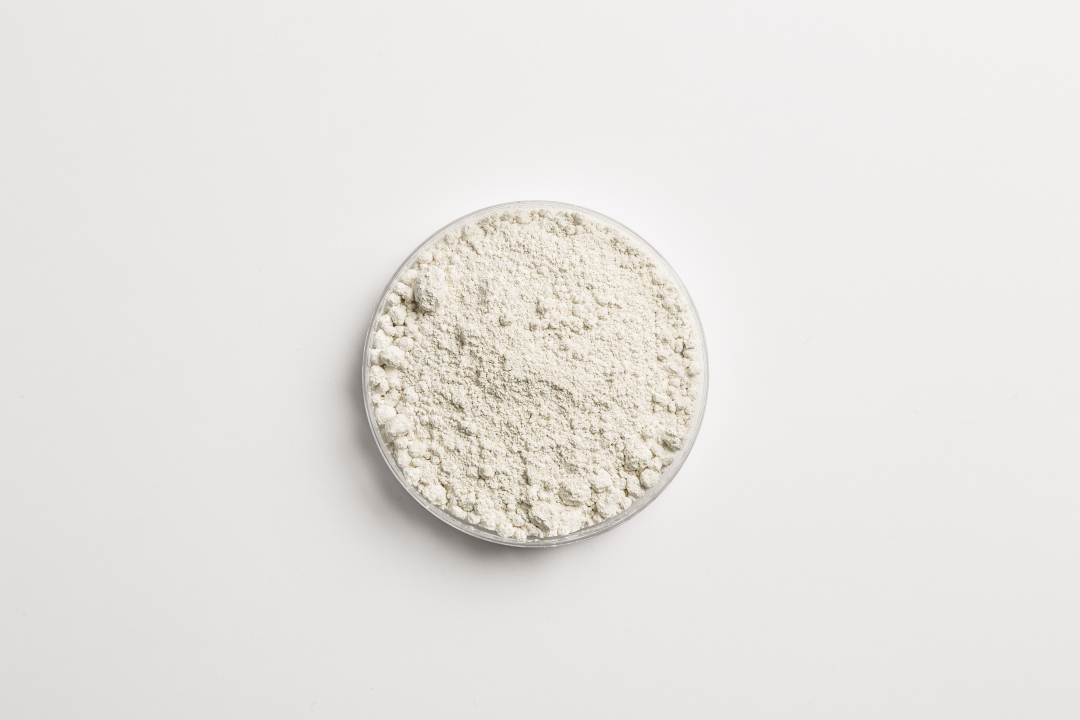
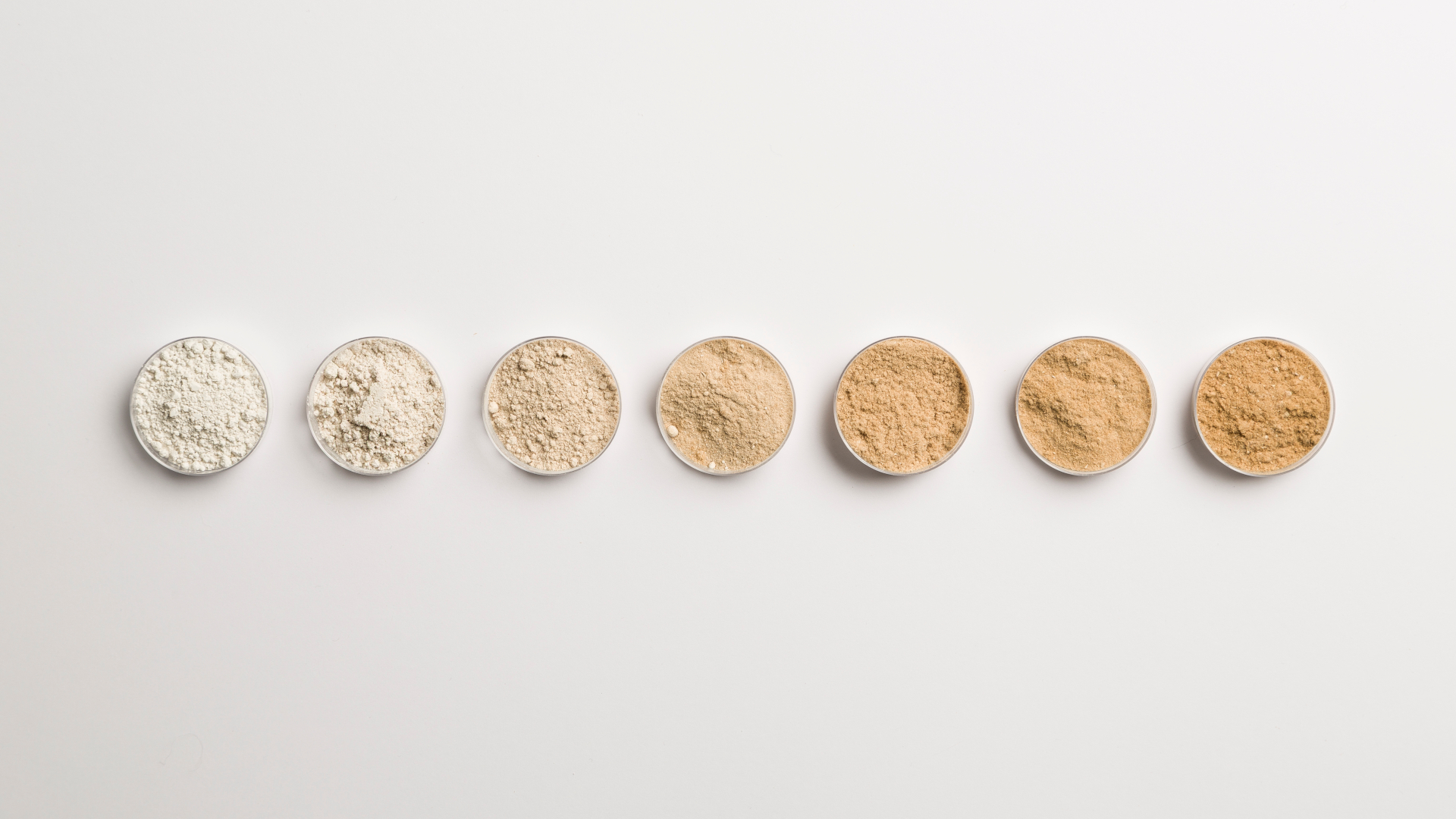
Calcium carbonate is used as a filler component within the panel system. Due to its higher density compared to the wood-based filler, it increases the weight, rigidity, and compactness of the composite in specific zones. Its distribution creates a gradient across the panels, resulting in variations in both coloration and density.
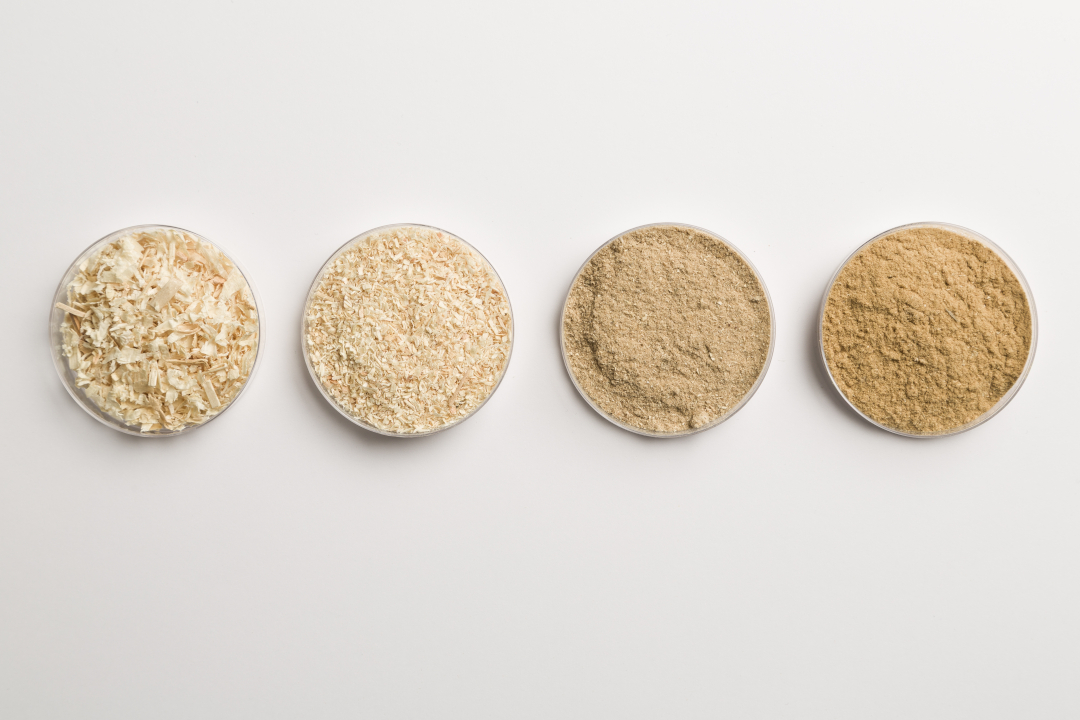
Sawdust and woodchips that originated as a wasteproduct during building frames for panel-production was reused as a filler material, providing additional reinforcement and serving as a natural pigment.
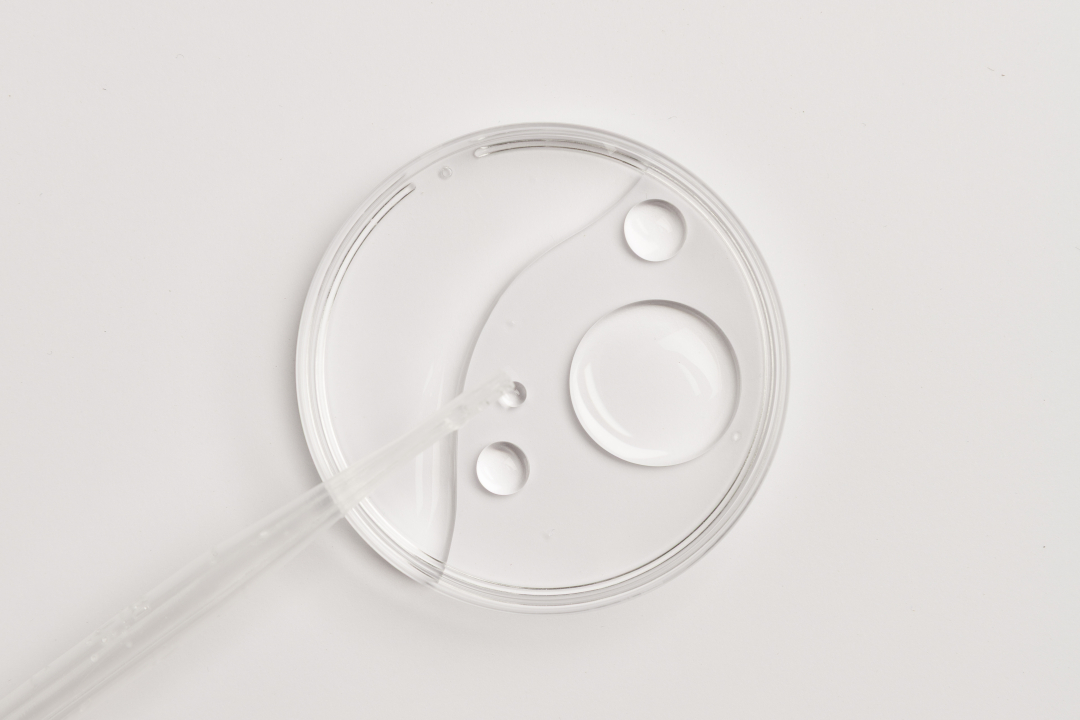
Glycerol serves as a plasticiser, making the material more resistant to breaking and providing the possibility to adjust flexibility of the material. Lower parts are very flexible due to more share of glycerol within the material matrix, parts further up are stiff with only a minimal amount to prevent breaking and deformation during the drying process.
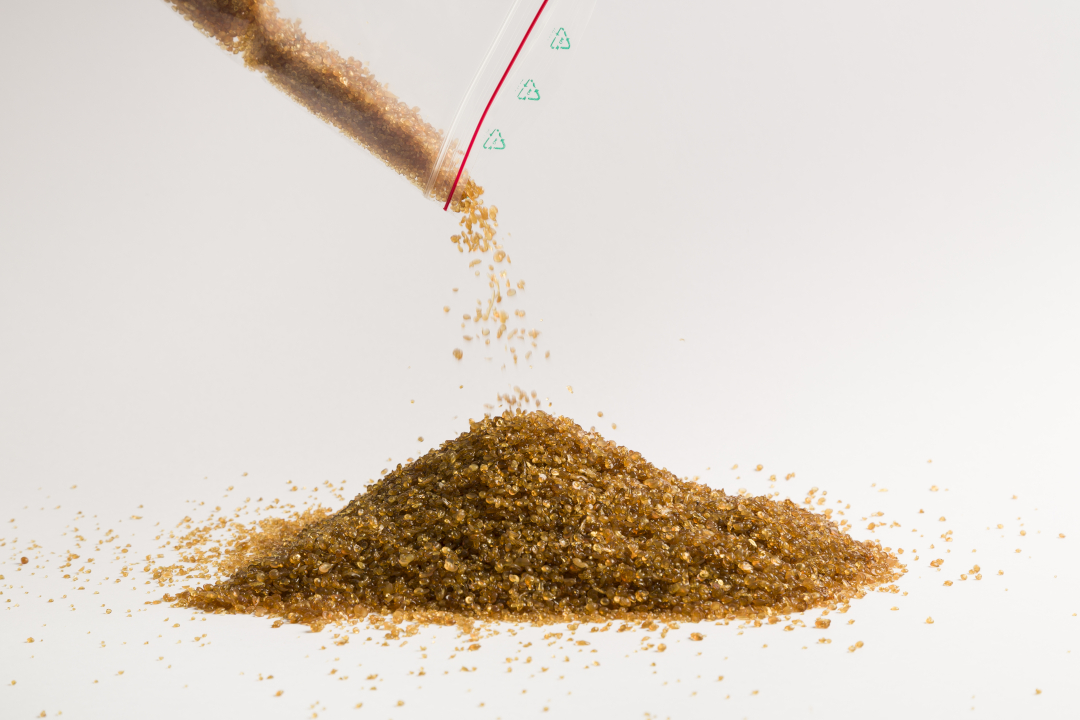
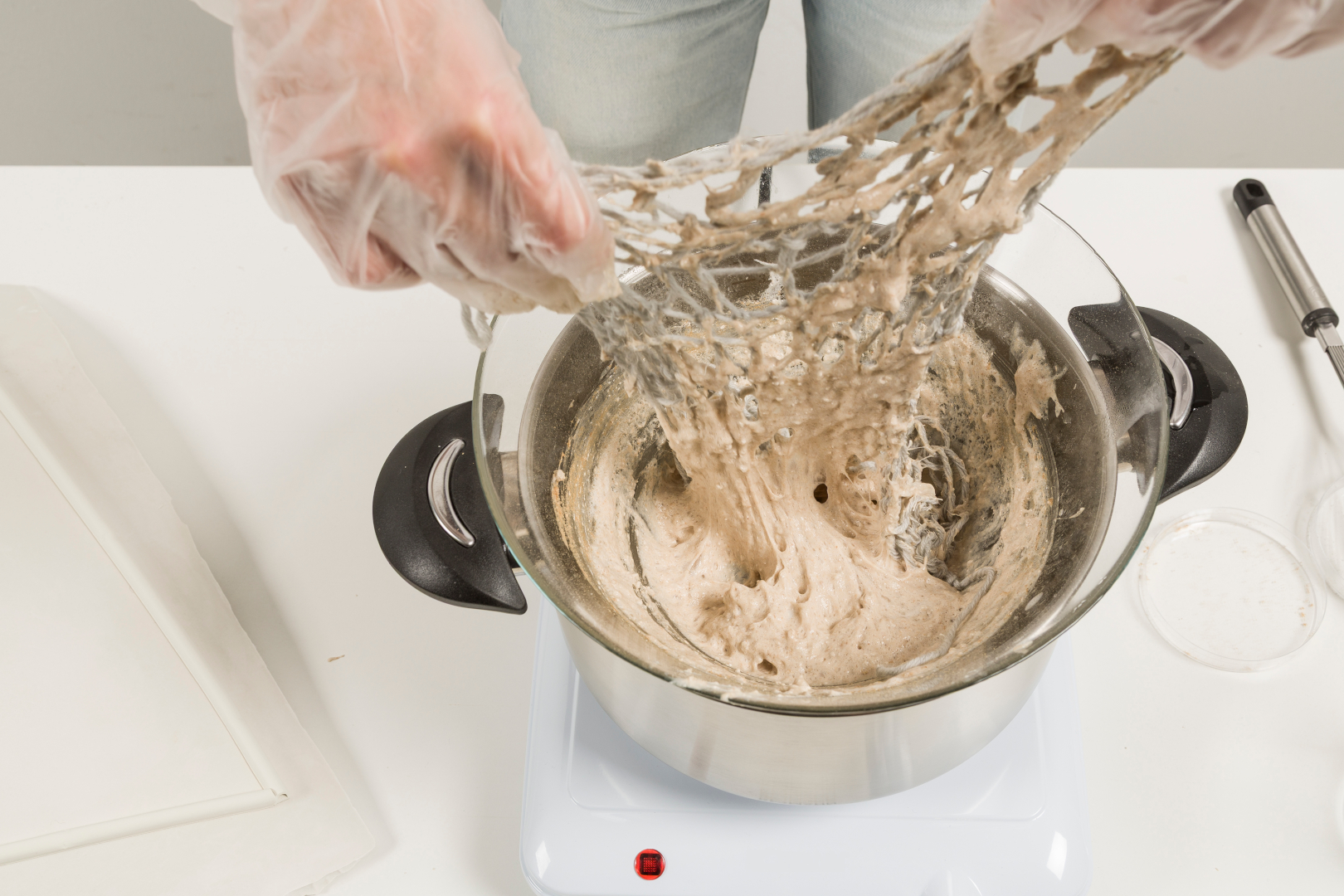
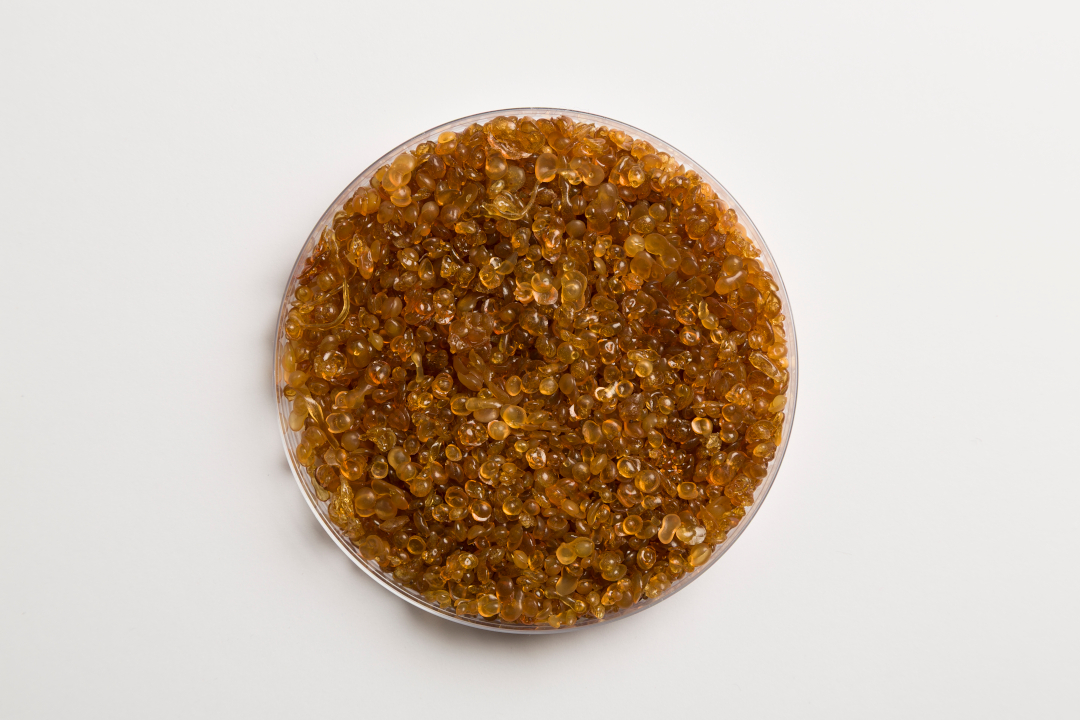
Bone glue is a natural adhesive derived from animal-based collagen. When heated with water, it becomes a viscous binding medium used to dip and coat the wool fibers. During drying, it solidifies and locks the fibrous structure into a lightweight but stable composite. Its mechanical behavior is sensitive to humidity and temperature, shifting between flexibility and brittleness over time.
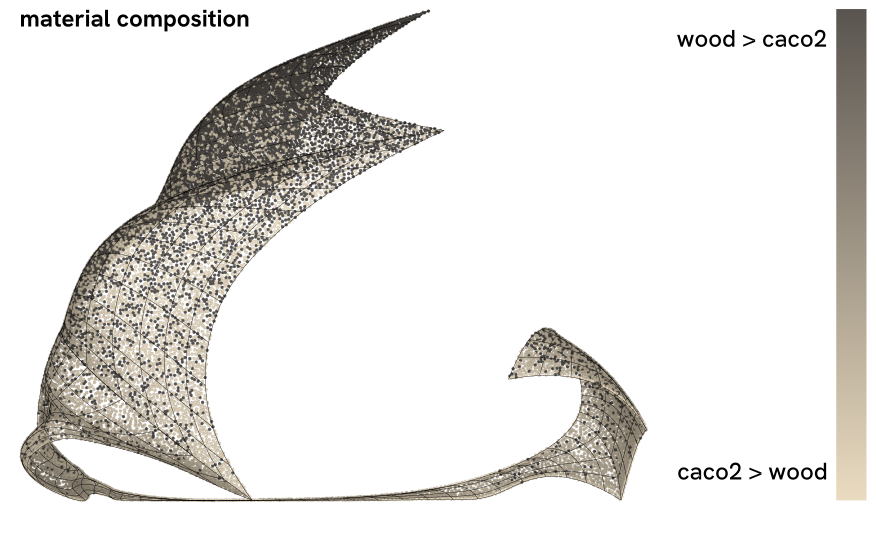
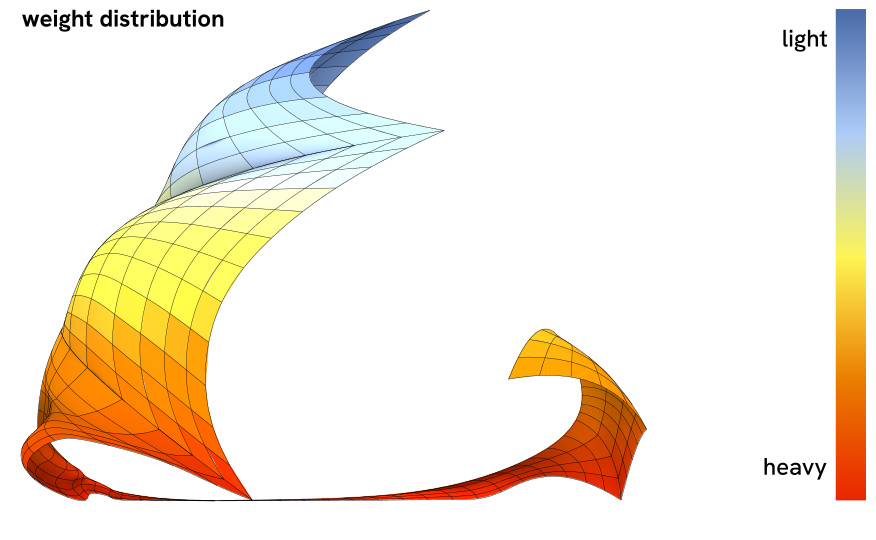
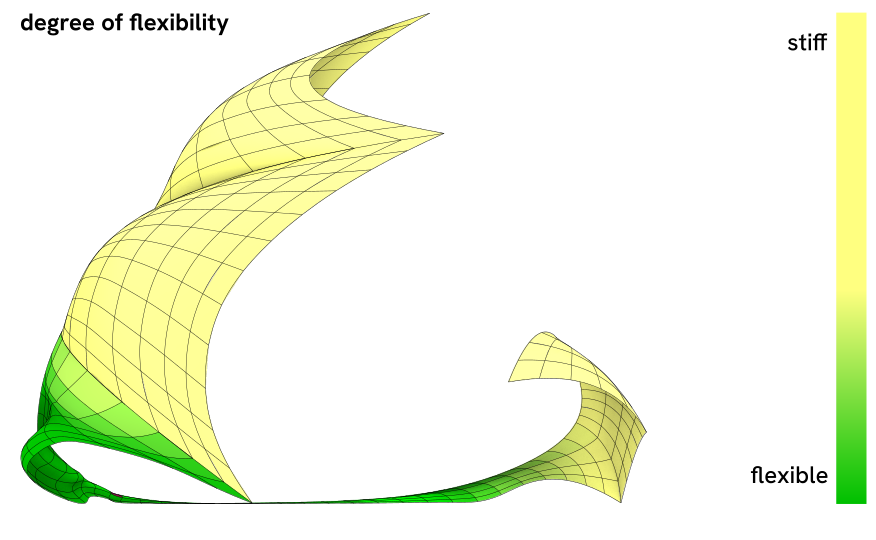
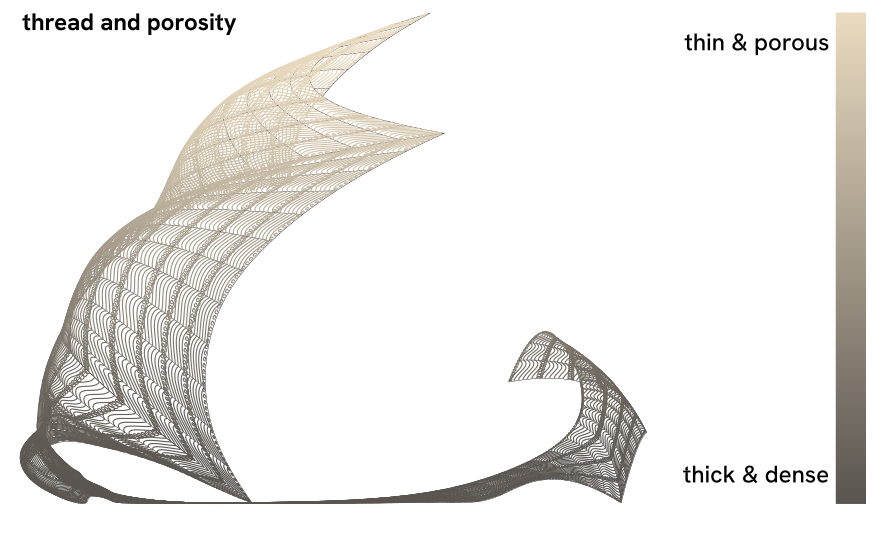
material logic & panel structure
FUNCTIONALLY GRADED MATERIALS
varying densities, thicknesses, and composite mixtures can be strategically distributed according to structural and spatial requirements
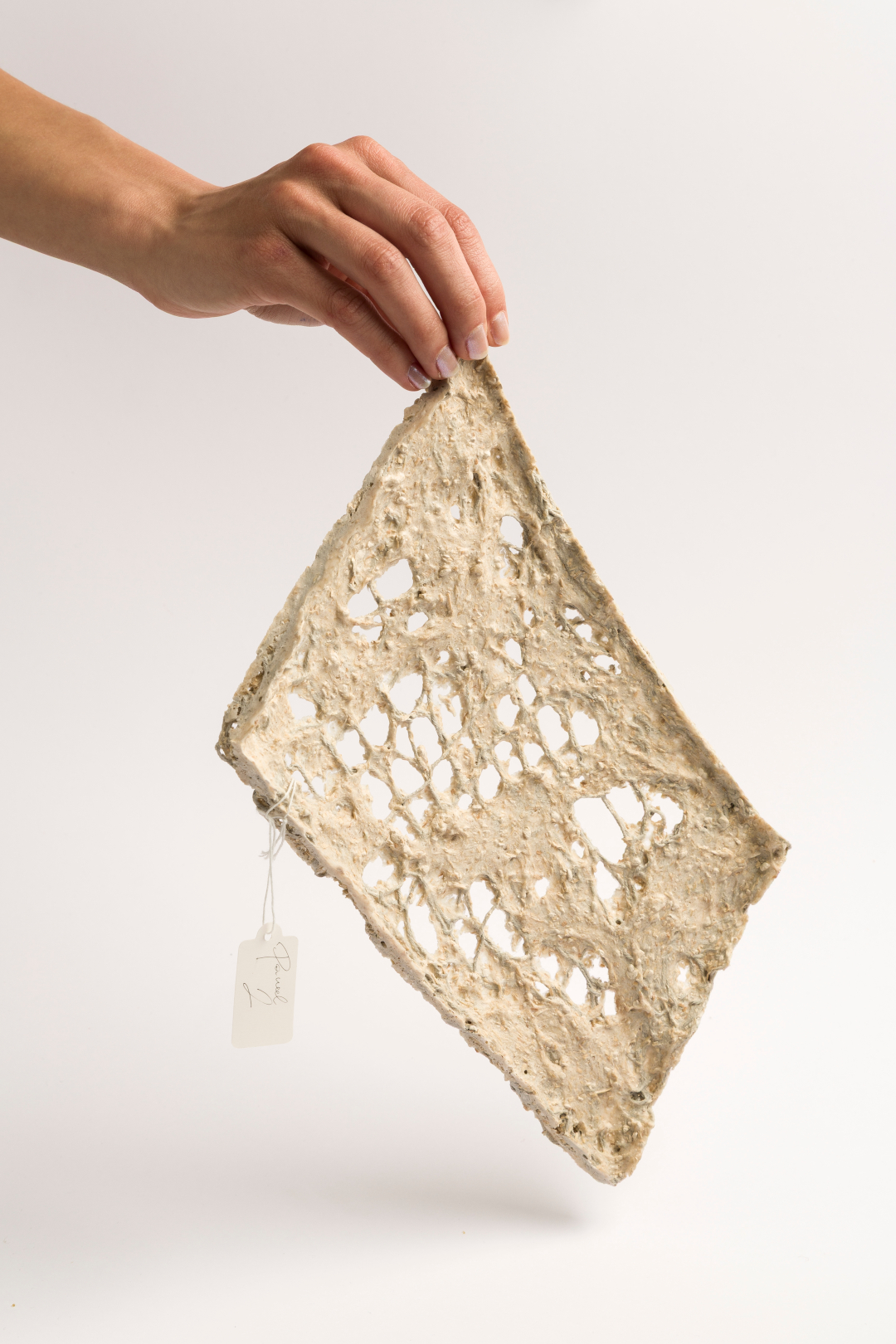
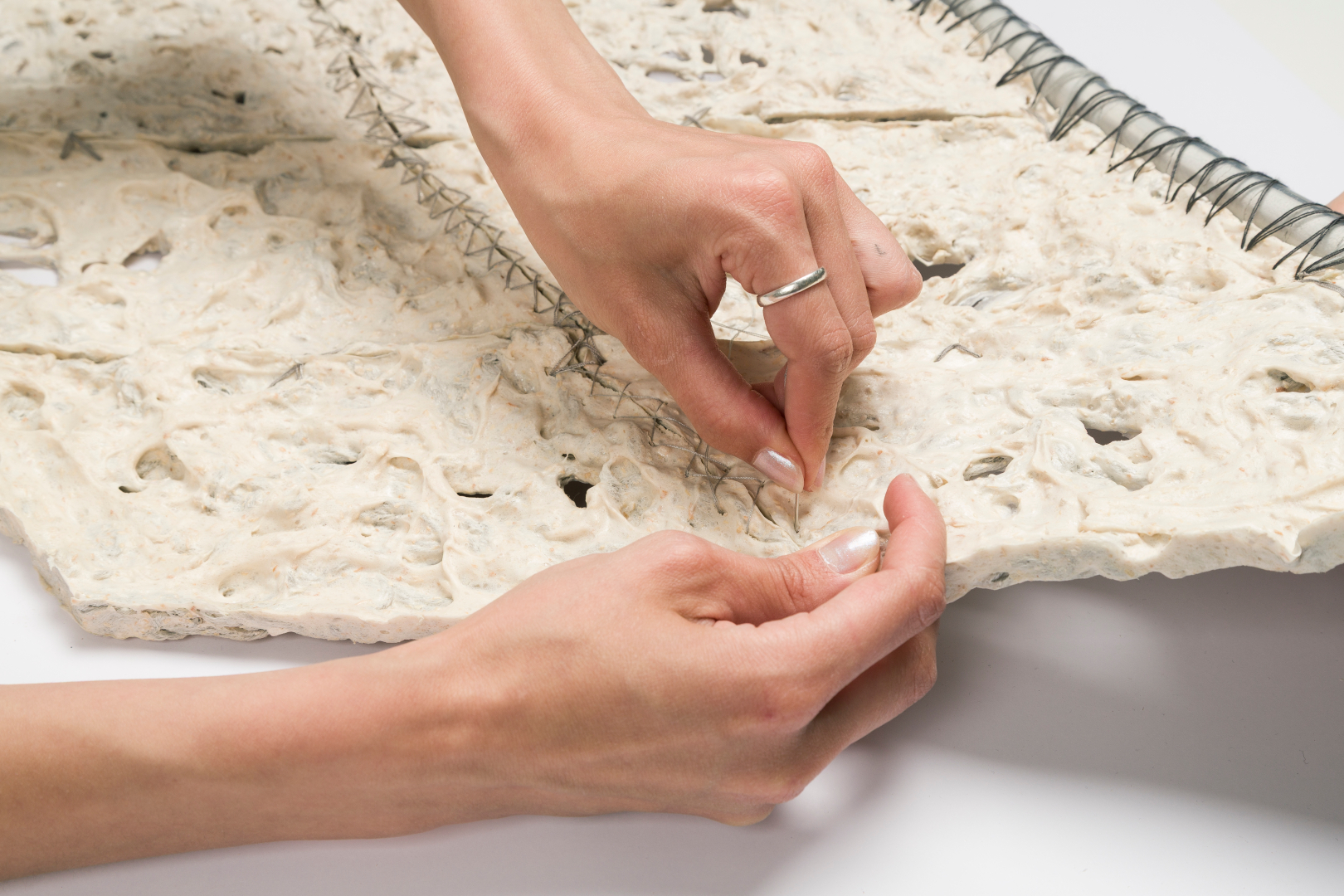
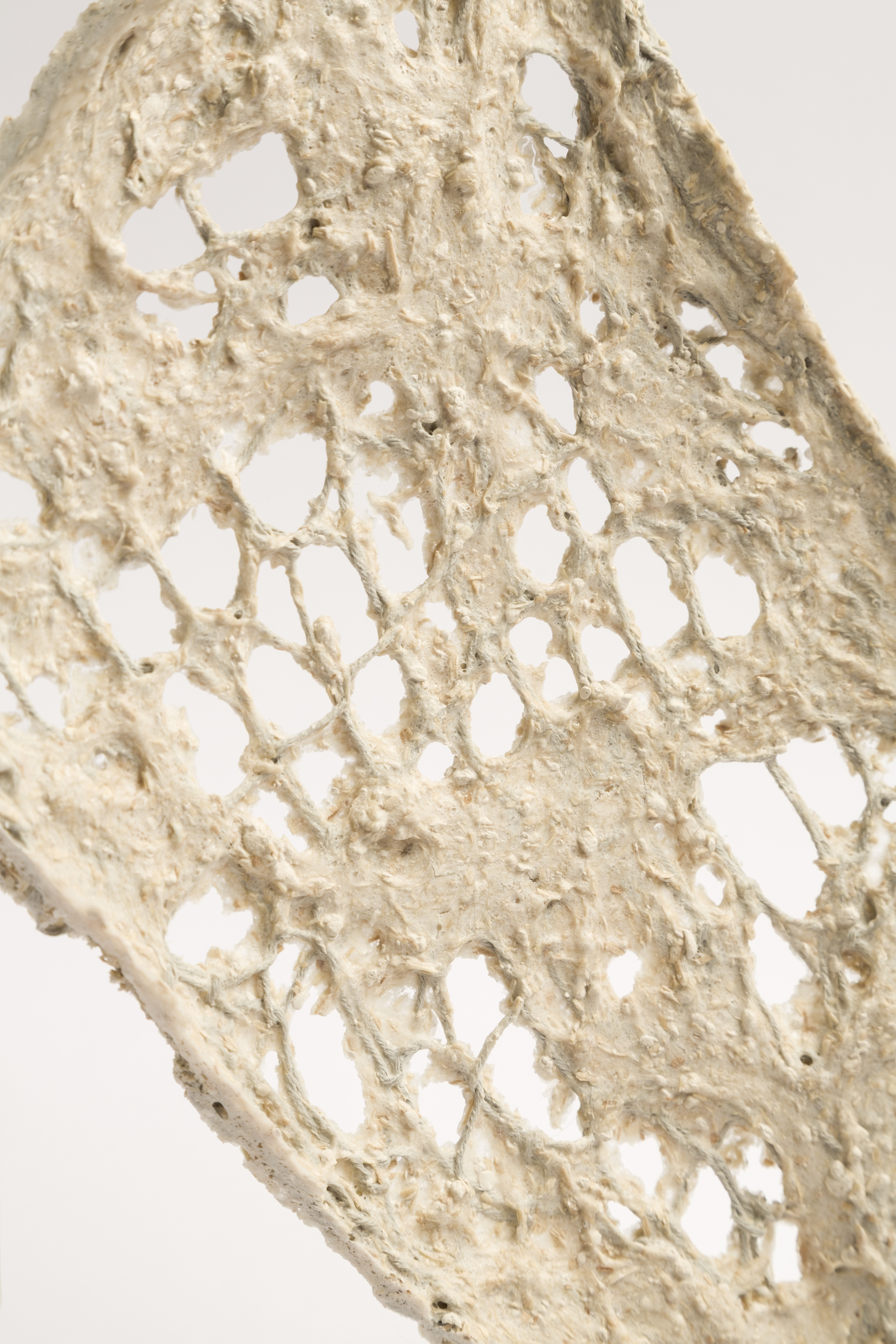
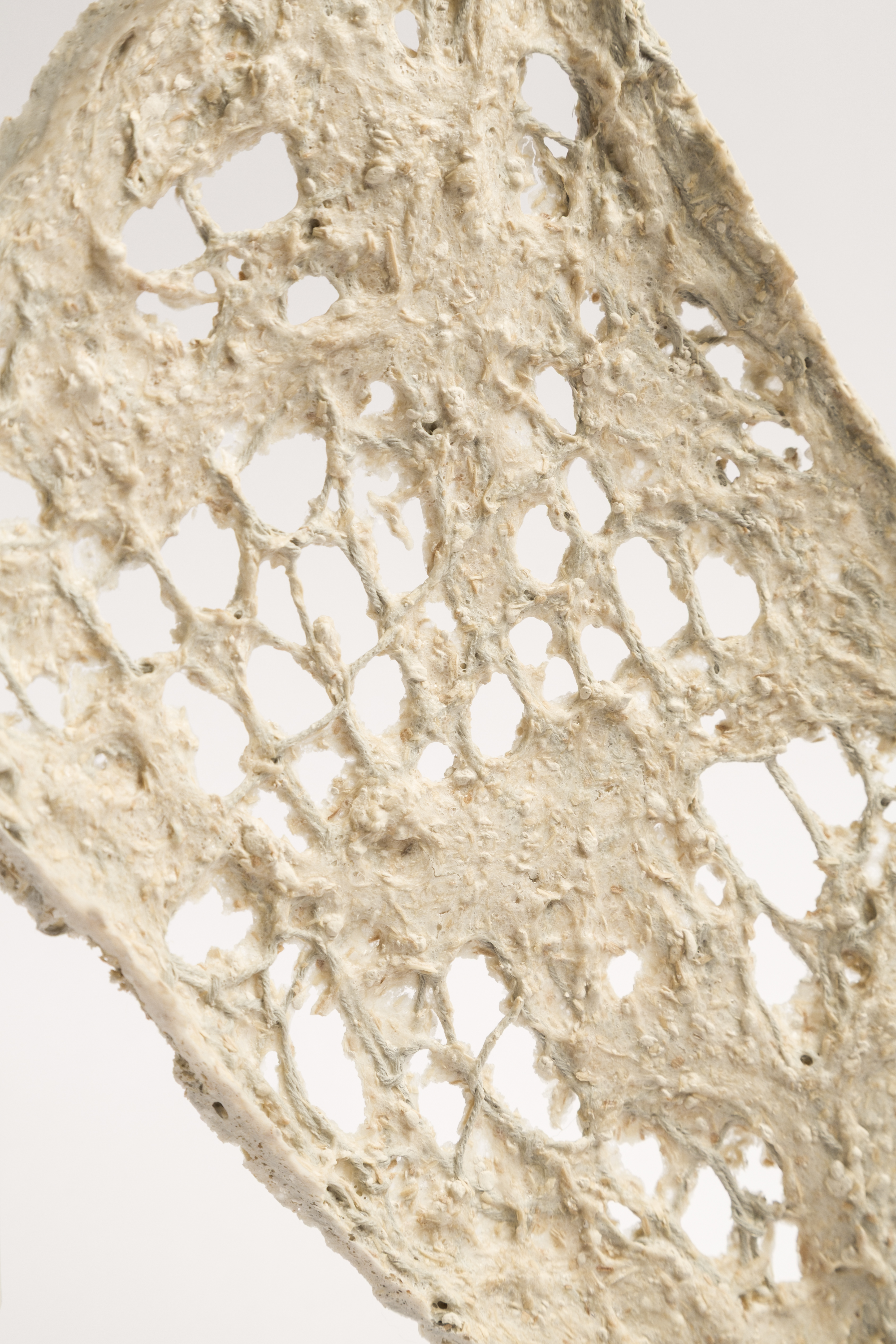
DIFFERENTIATED PROPERTIES
panels in lower parts of the structure vary in terms of flexibility due to adjusted material matrices, resulting in adaptability to different grounds and surroundings.
CONSTRUCTION
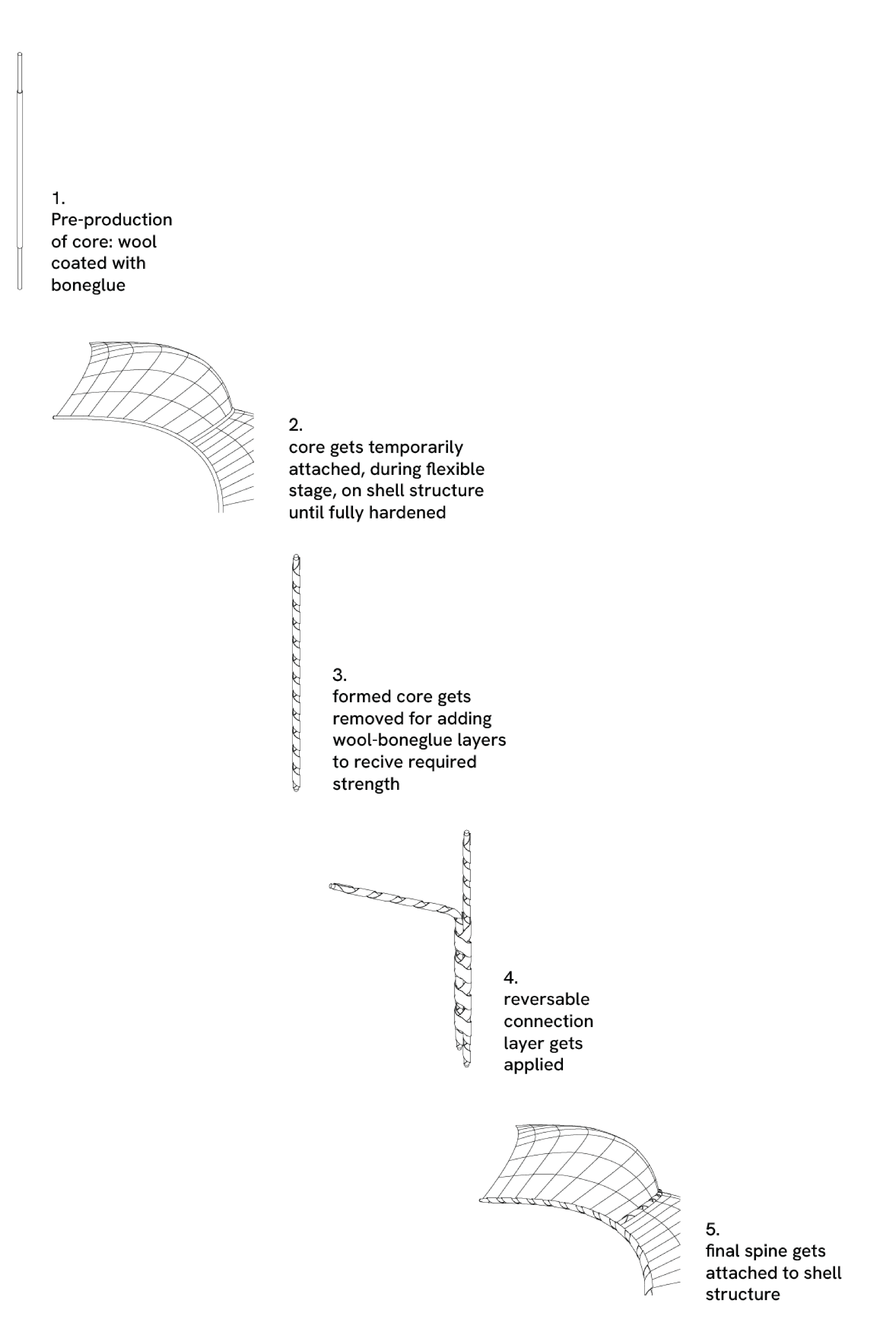
The beam construction system combines wool yarn and bone glue into a layered composite assembly, developed through successive coating and curing stages. Rather than functioning as a pre-defined component, the system operates as a form-adaptive element whose geometry is directly derived from the curvature of the pre-stitched shell structure.
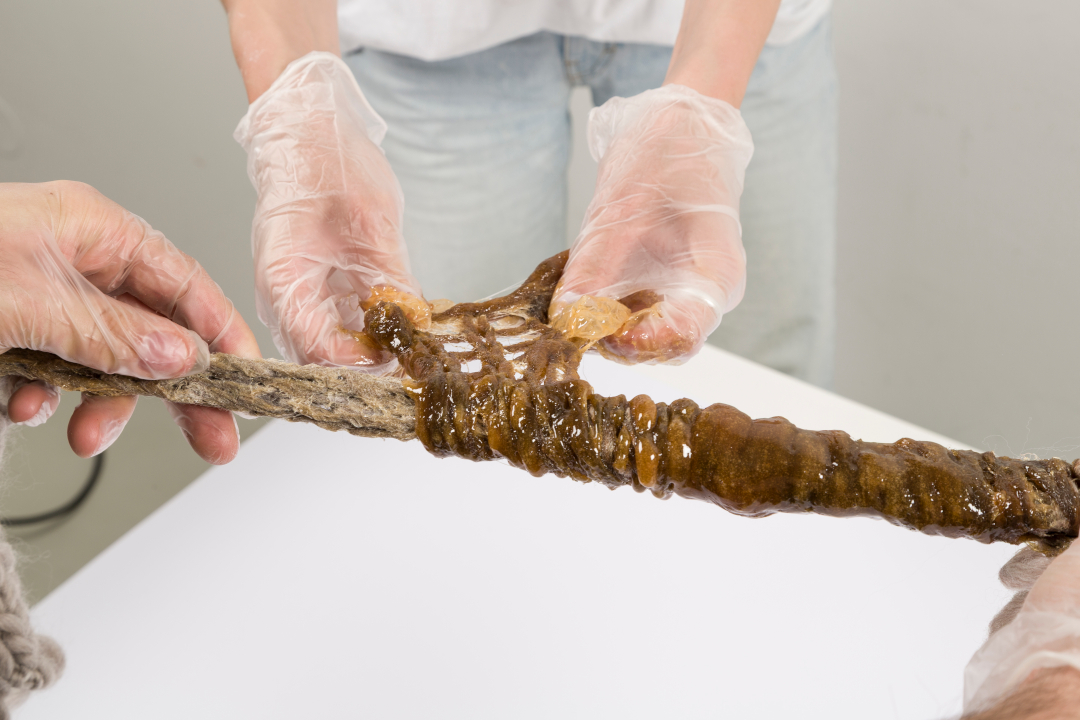
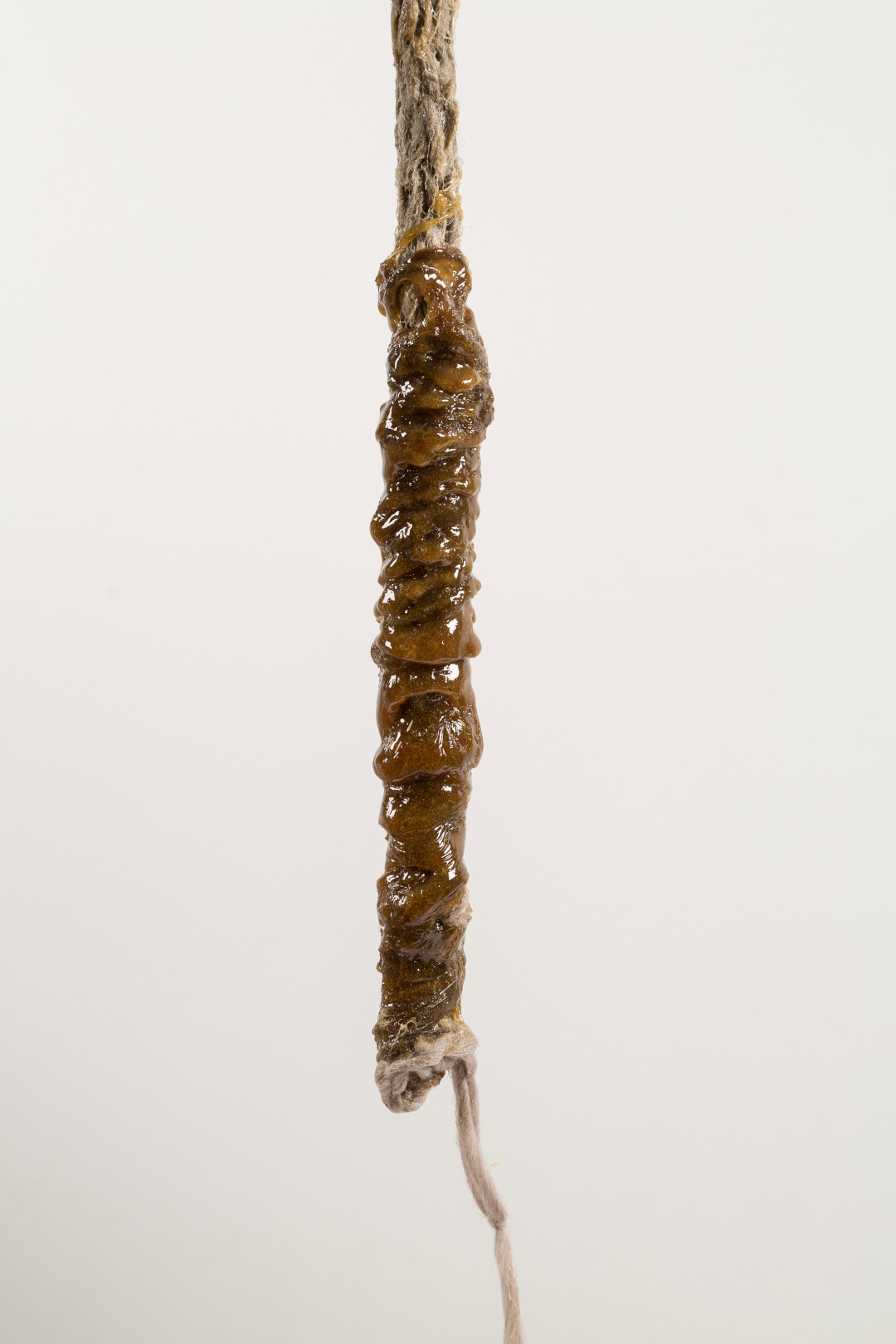
The so-called spine is carefully dimensioned according to its load-bearing requirements and is gradually thickened through the addition of successive layers, each layer increasing stiffness and structural capacity while maintaining continuity with the underlying fibrous structure.
PRODUCTION PHASES OF STRUCTURAL SPINE
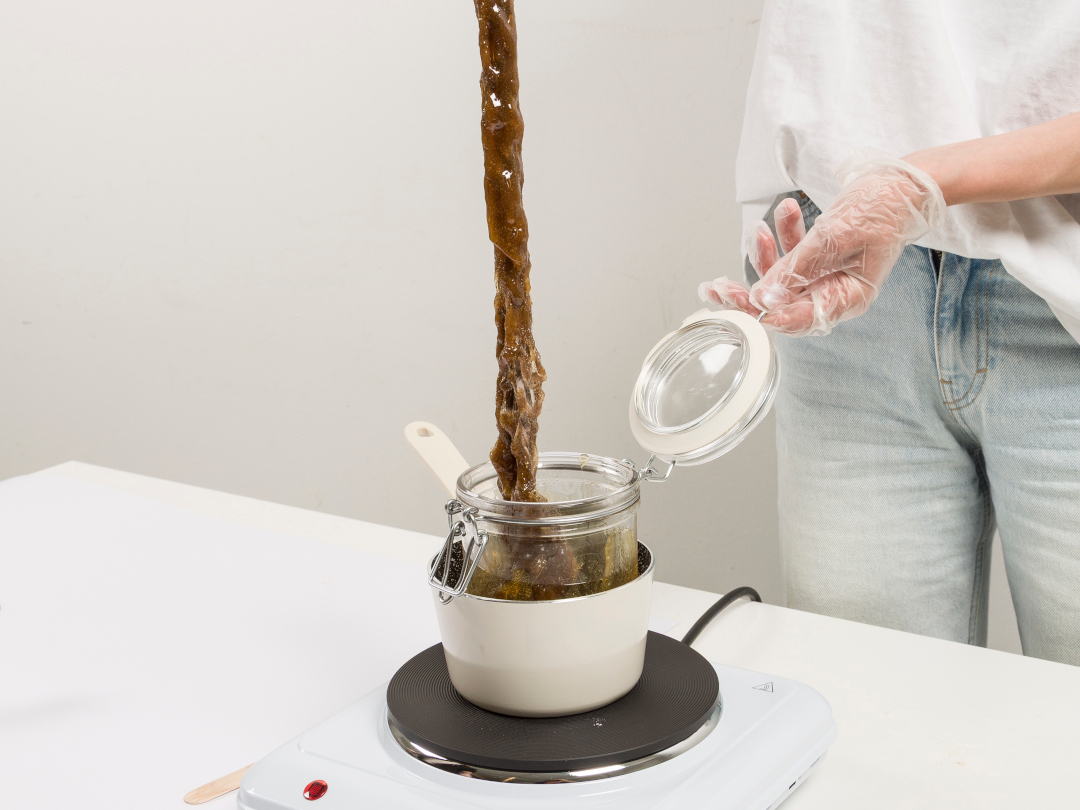
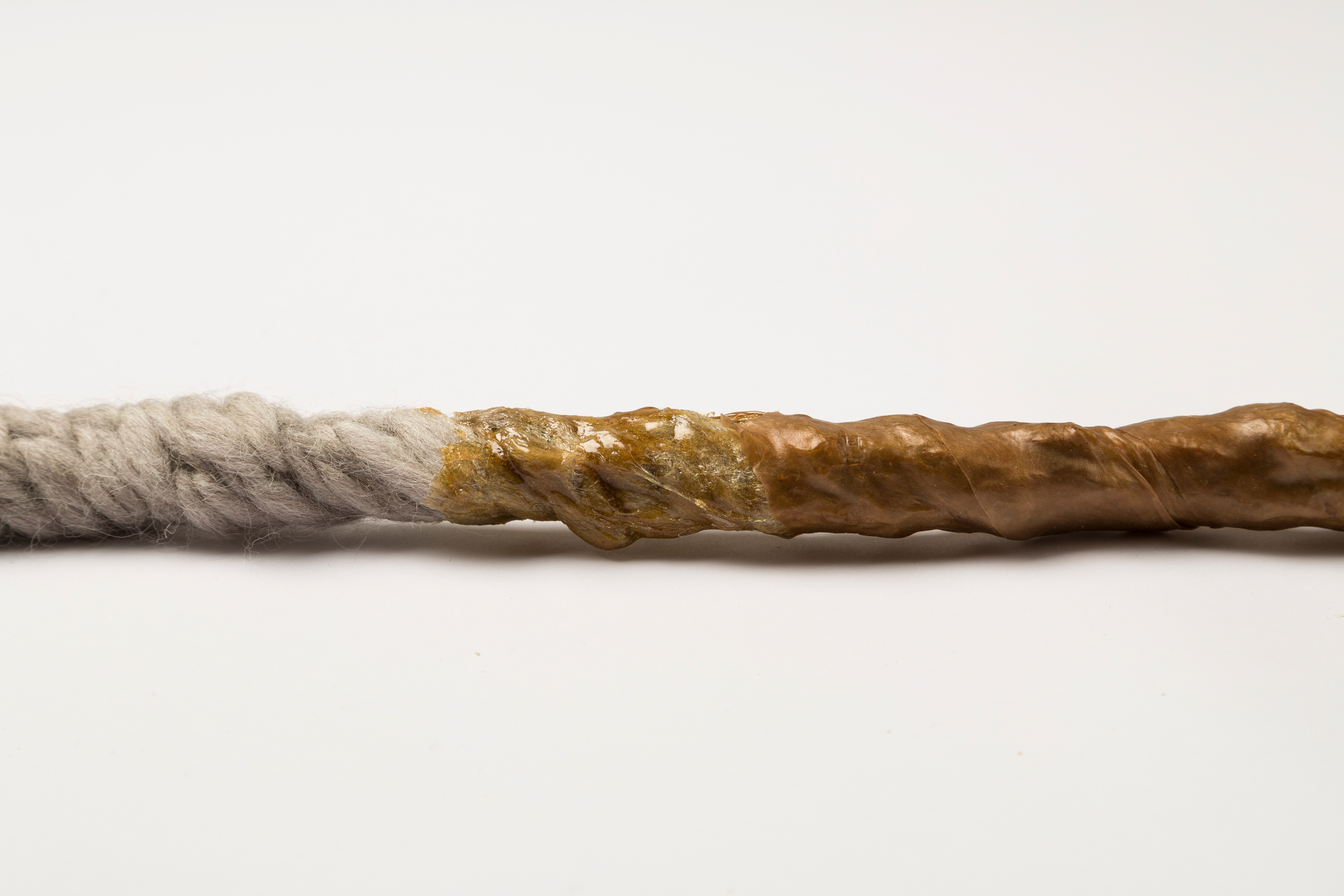
wool, bone glue & collagen casing
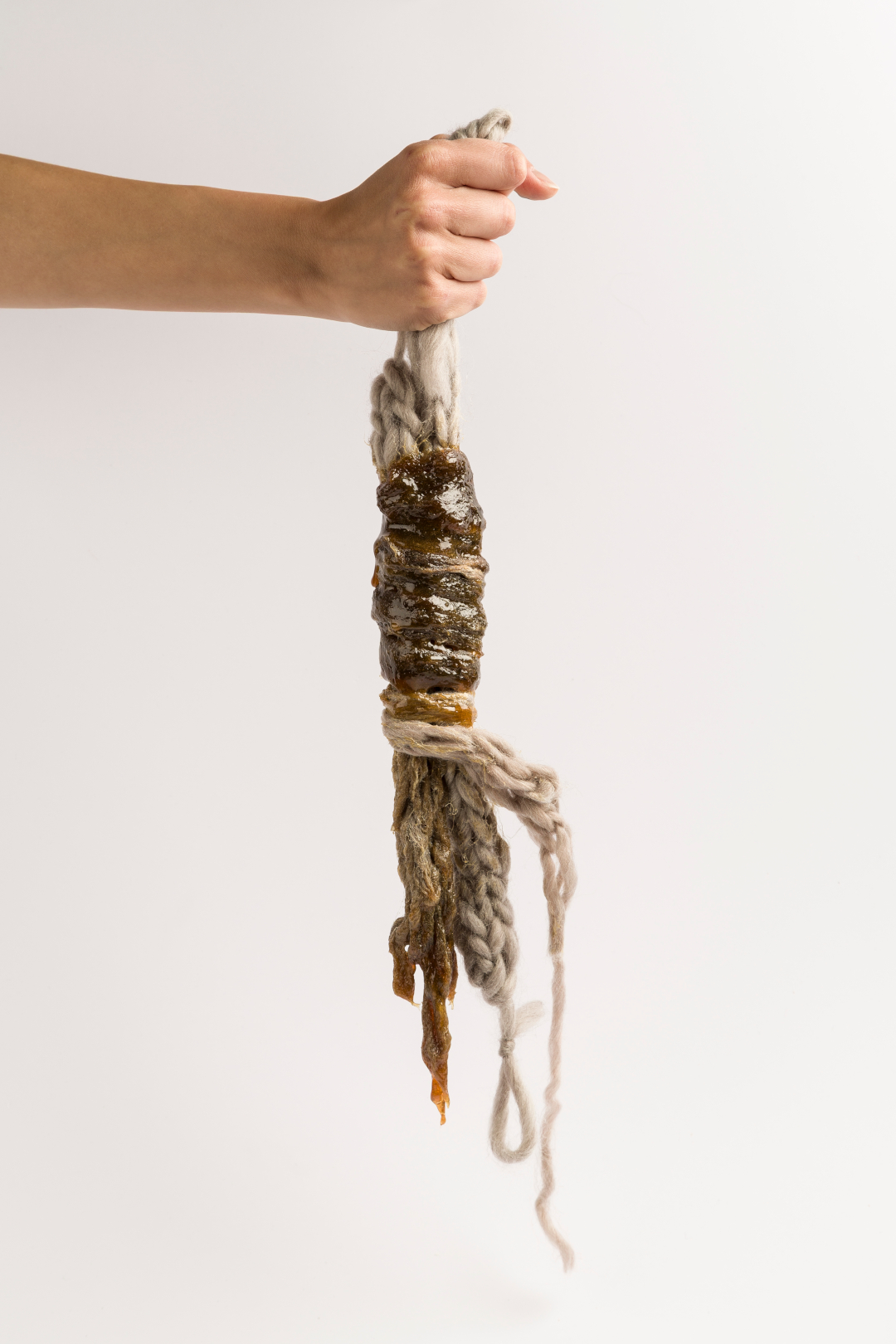
successive adaptive layering process resulting in high load-bearing capacities. furthermore serving as a seamless connection of parts to produce a homogeneous structural beam with a great weight to strength ratio built with compostable materials only.
PRODUCTION
The production process is based on a carefully composed pipeline, calibrated to the material behavior of the system. It consists of four main stages: formwork fabrication, panel casting, shell assembly, and beam integration. Each step is defined by the interaction between material properties and fabrication constraints, ensuring that geometry and performance emerge from the behavior of the composites. Gelatin-based panels are cast in reusable gypsum formworks produced on a vacuum membrane (TU Vienna) and dried within the mold to ensure geometric precision. The panels are then stitched into a continuous shell, followed by the application of the beam system, which is adapted to the final geometry as the primary structural spine.
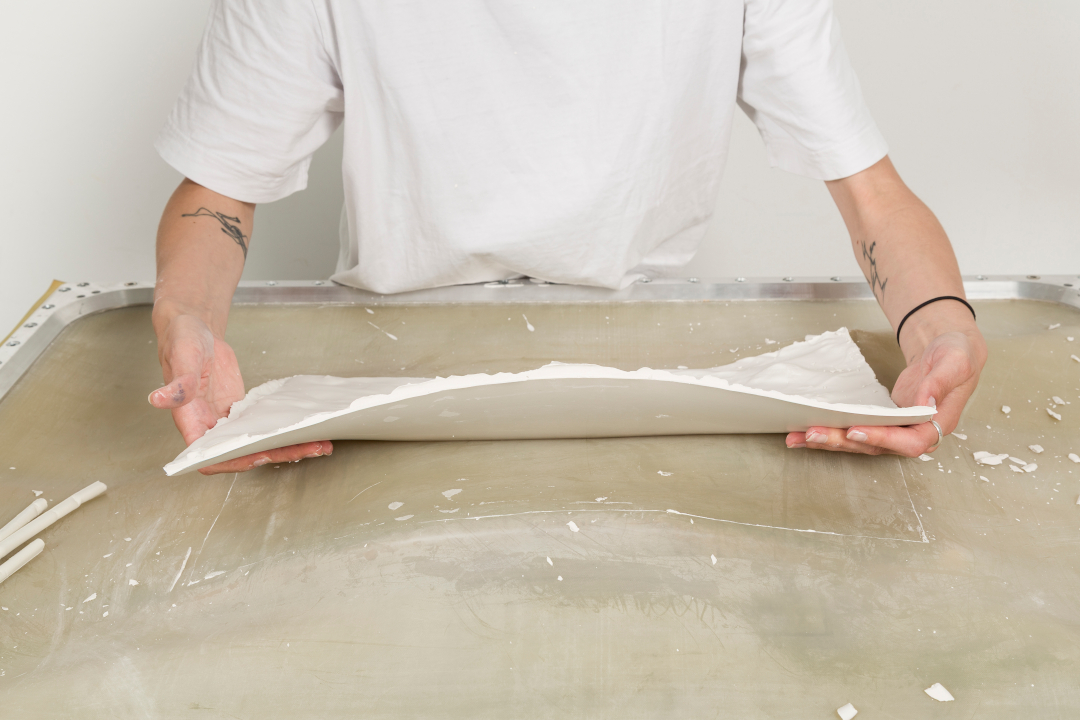
The panel formwork defines the geometry for each element and is produced in gypsum on a silicone membrane using a vacuum forming process developed at the Technical University of Vienna. The system allows for reusable molds.
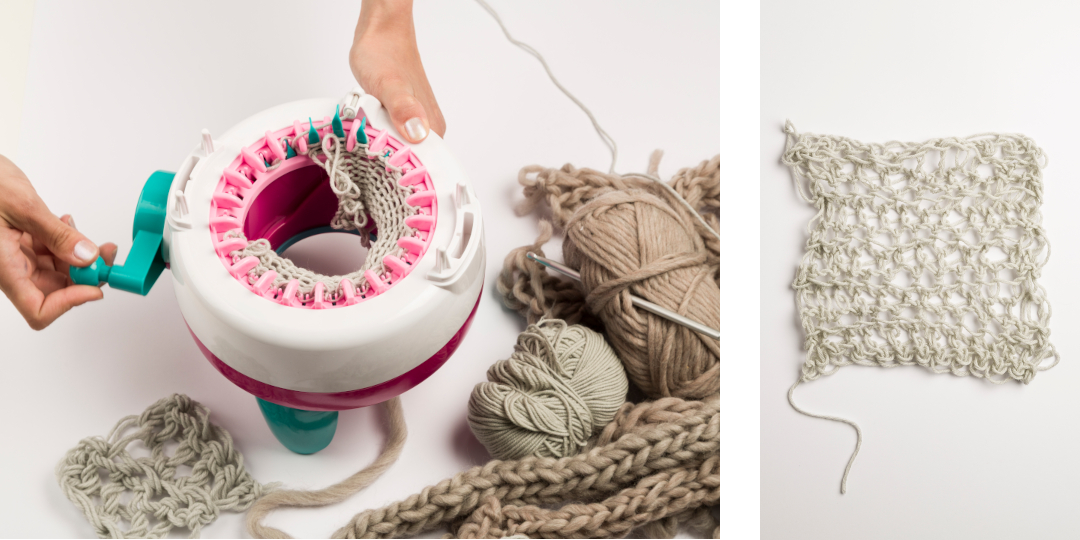
The textile base panels are produced from wool yarn using both hand crochet and machine-assisted crochet techniques. The crocheted structures form the primary fibrous substrate of the system and are characterized by differences in yarn thickness and crochet density. This allows for differentiated behavior, influencing tensile strength and material absorption capacity across the panels.
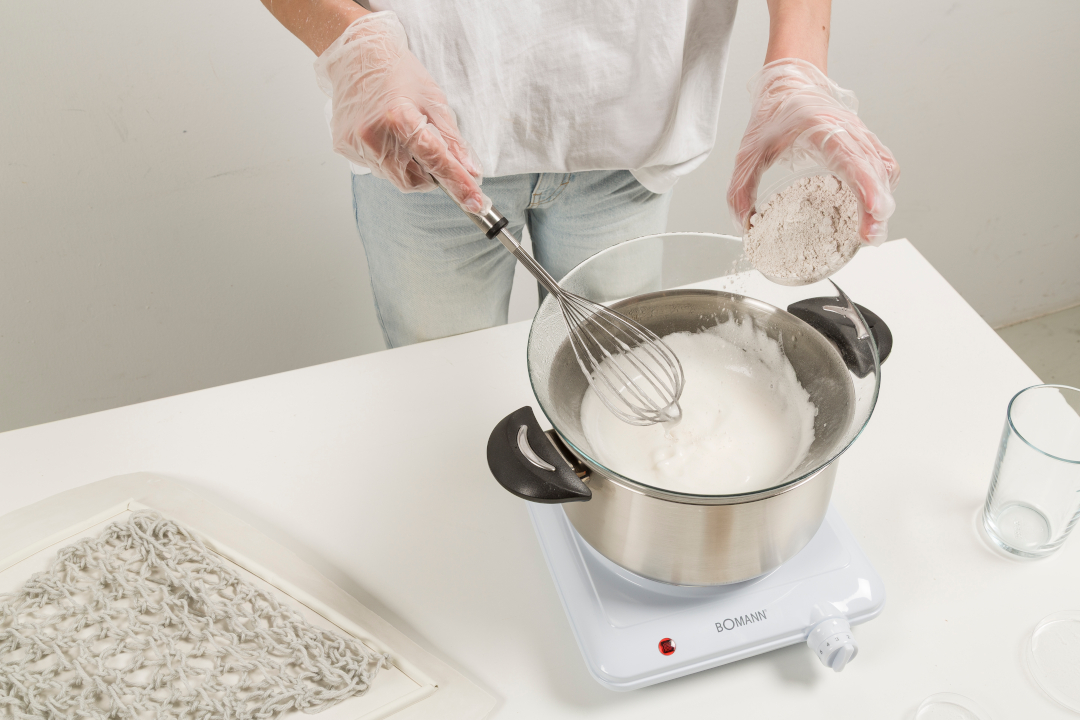
Each material matrix is calculated and adjusted according to the required gradient between stiff and flexible panel zones. Due to this variability, the mixing process is highly sensitive and requires careful regulation of temperature and material ratios. The crocheted textile base panels are manually dipped into the prepared matrix and carefully applied onto the formwork, ensuring controlled impregnation and precise alignment with the geometry.
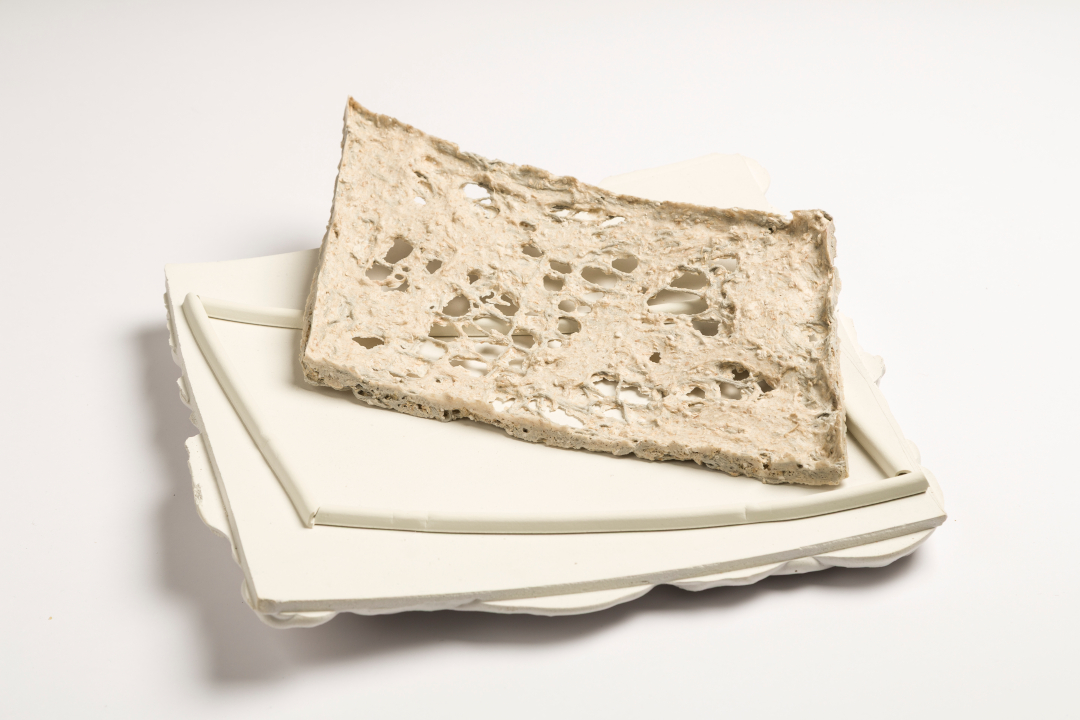
The drying process is closely monitored. Careful regulation of temperature and humidity play a critical role in determining deformation, the final geometry of the panel and its performance.
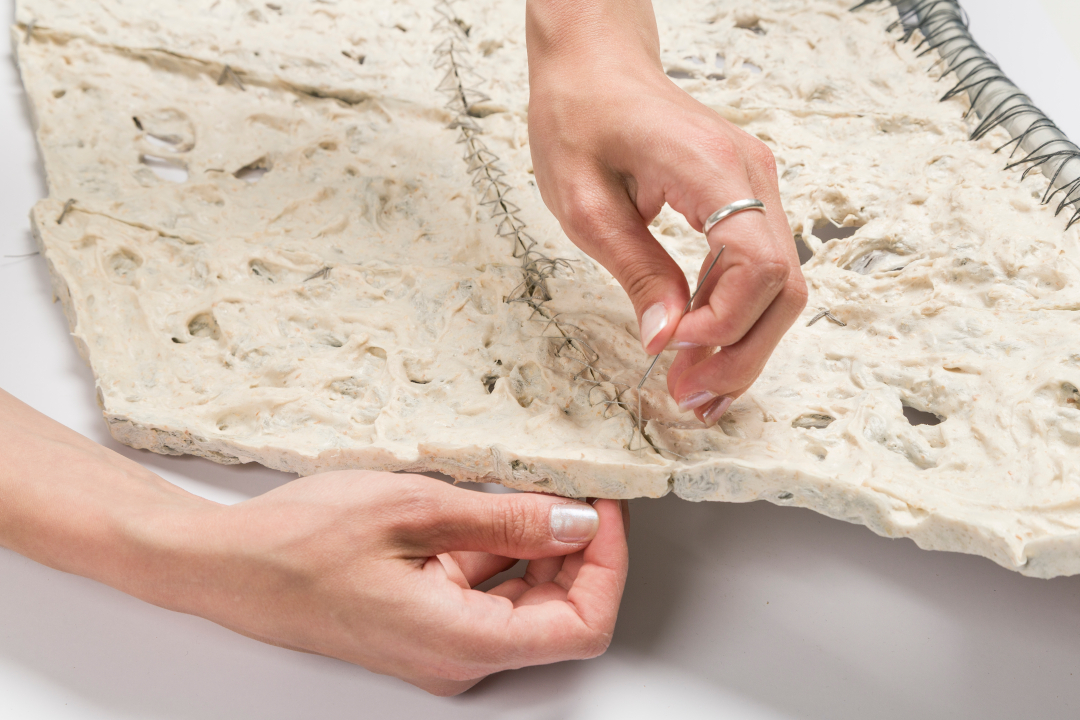
Individual panels are assembled into a continuous surface through stitching. This process establishes structural continuity while maintaining the logic of the system, gradually forming a coherent shell geometry.
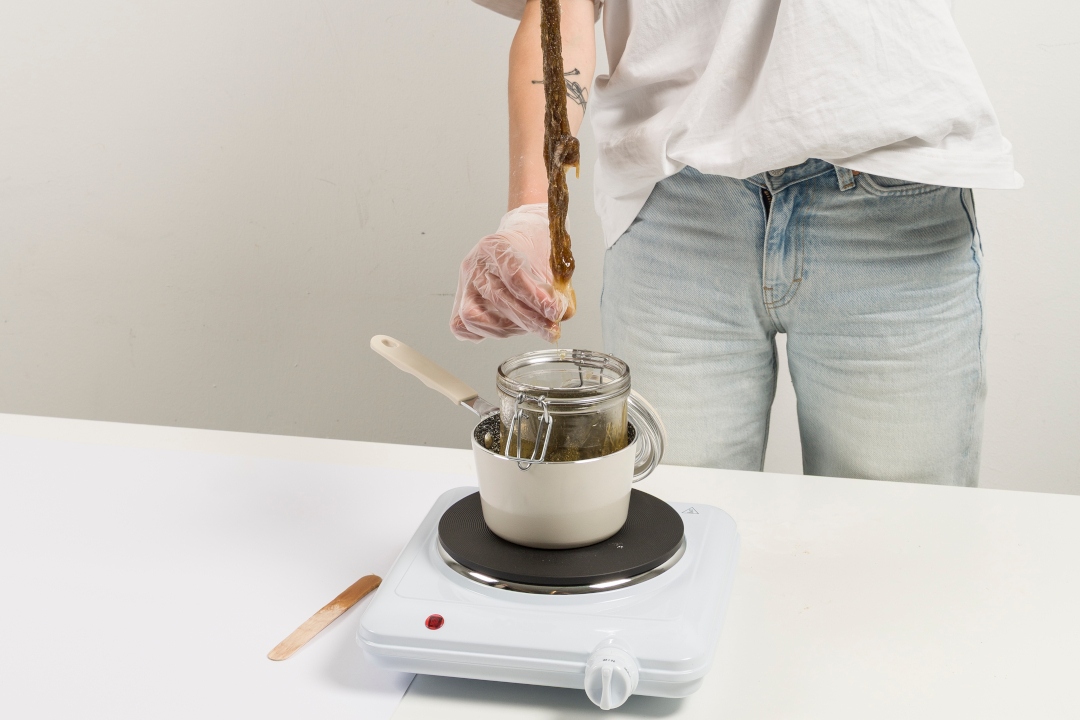
Wool yarn impregnated with bone glue is pre-produced to a curing stage in which the material is already partially stabilized while still remaining partially flexible to be able to bend directly along the panel edges.
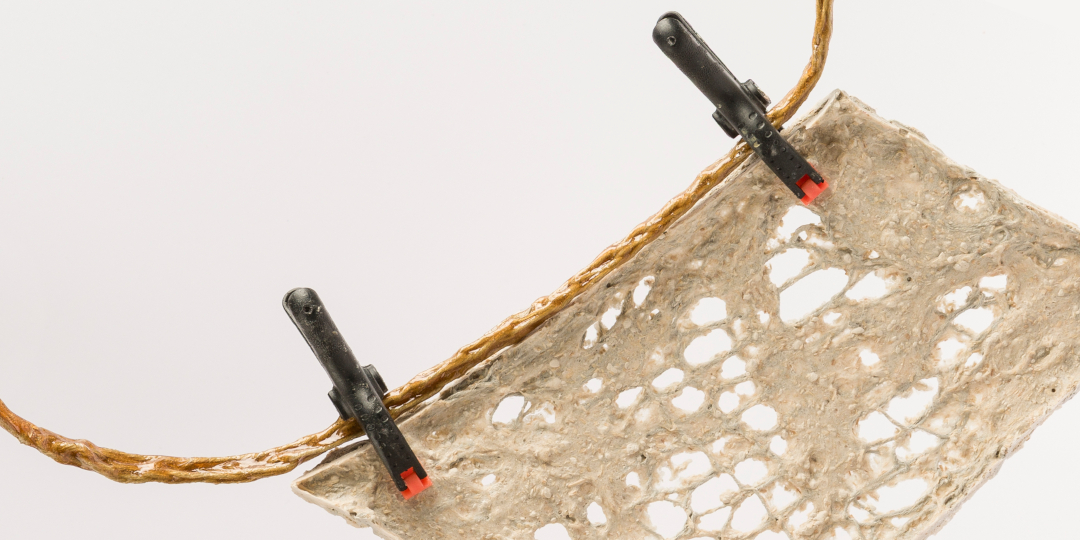
While being attached to the panel-structure, the core of the beam continues to harden, reaching its final full structural rigidity. After hardening, the spine is strengthened through a stepwise application process, where the fibrous system is gradually built up, adapted to the panel-structure.
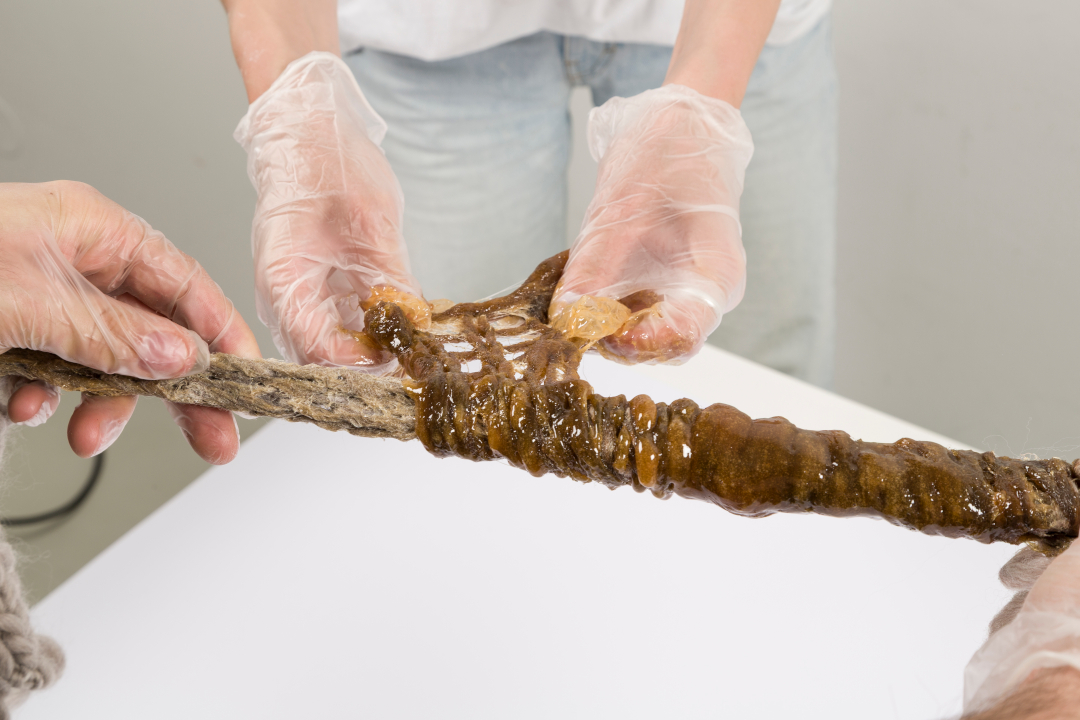
The shell structure and beam components are prefabricated in units that allow for transport and handling on site. Final assembly takes place in situ. During installation the final coating layer is applied to the spine elements, locking the system into its final form.
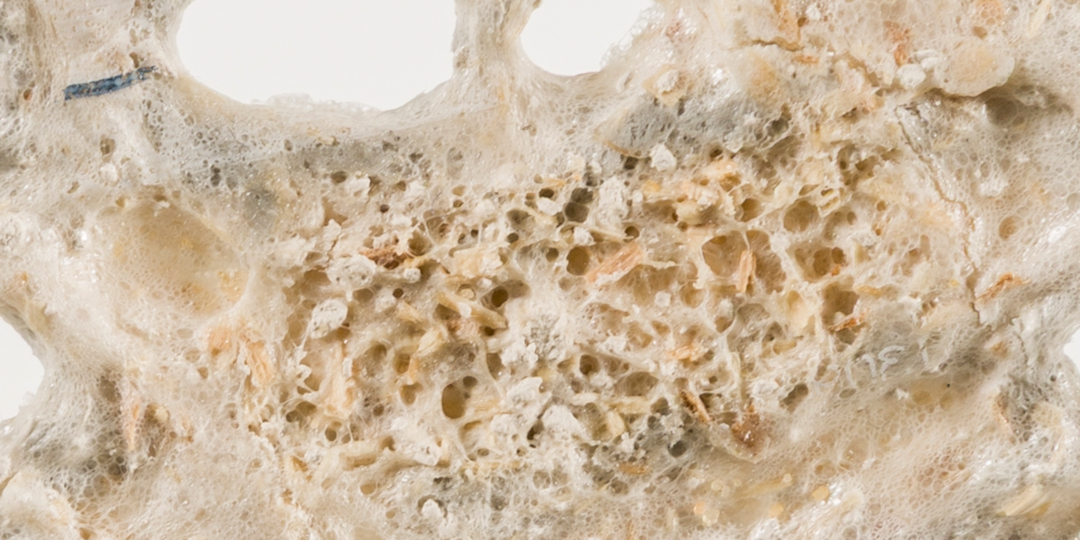
The final phase acknowledges the temporal behavior of the material system. All components are biodegradable and designed to gradually transform, degrade, and reintegrate slowly into natural cycles over time.
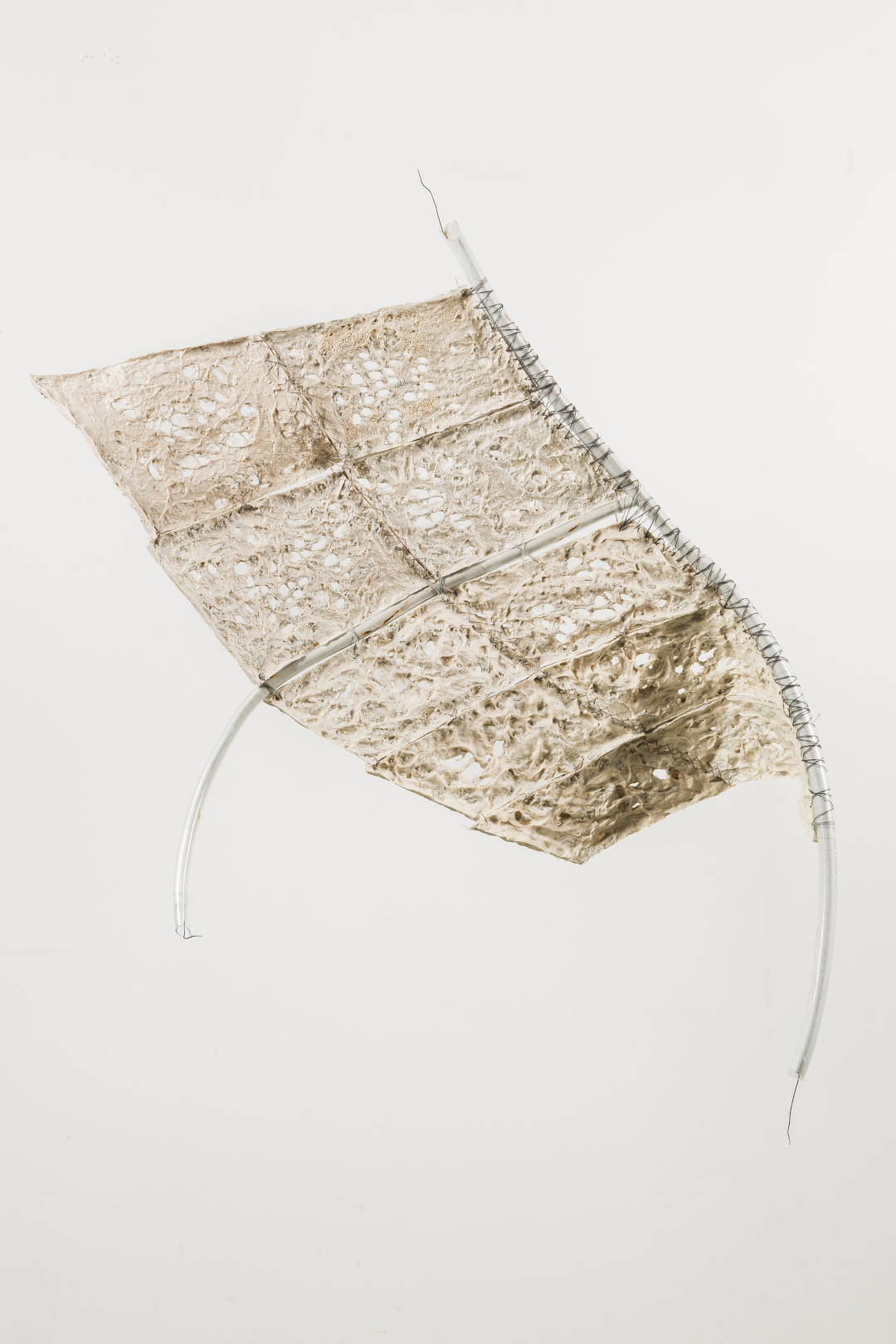
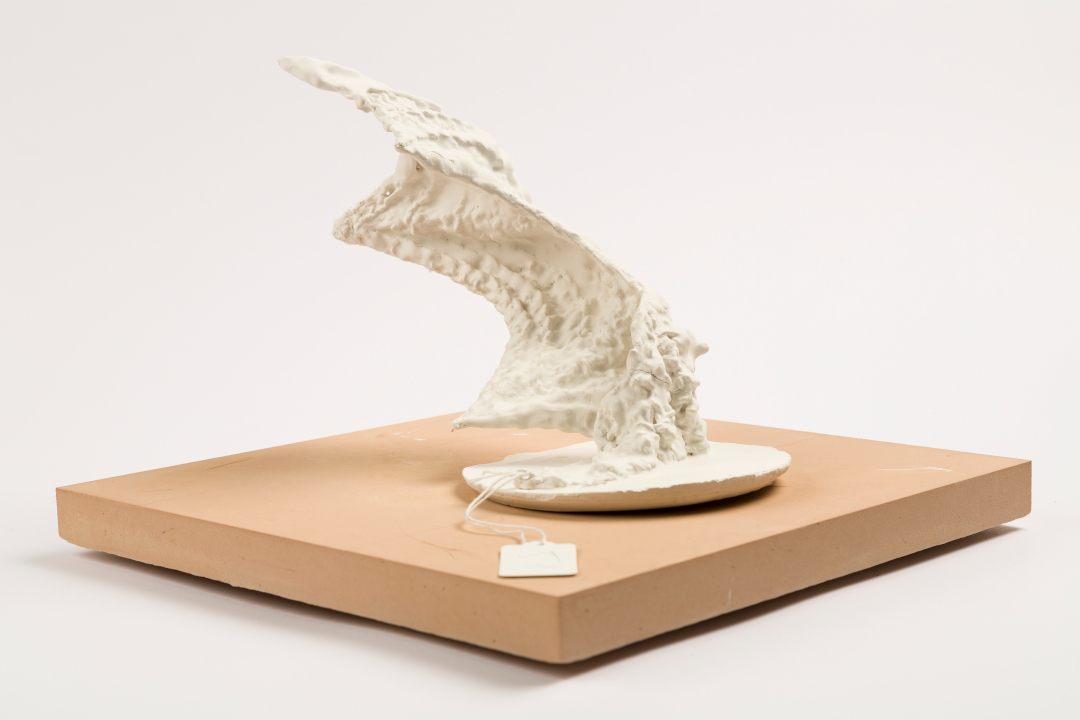
during an earlier stage of the project (02/26) a small number of panels has been produced to verify intended properties of the final material mix and to verify assembly logic.
PROPOSAL
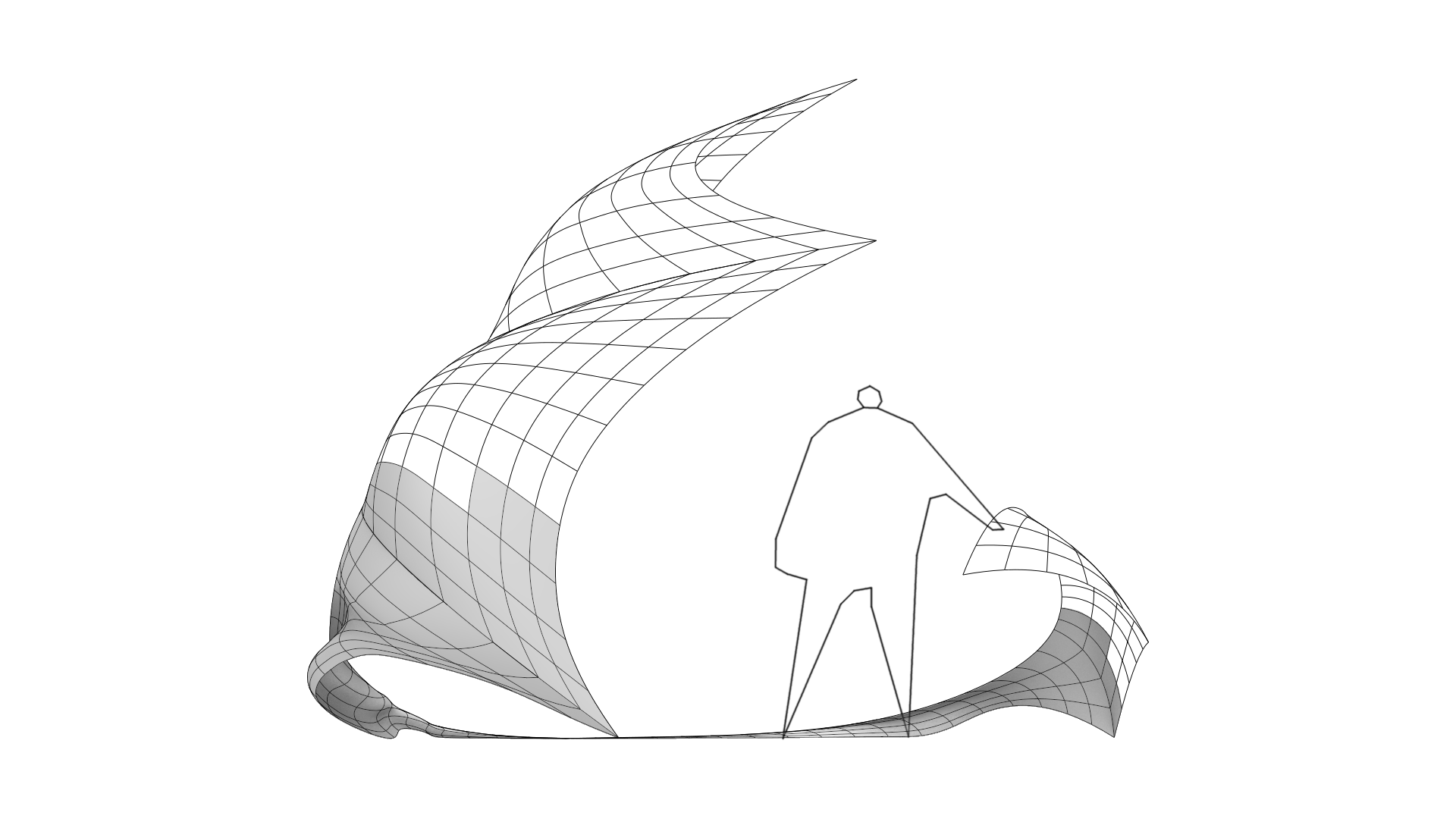
Our proposal investigates biodegradable shell structures as temporary spatial assemblies situated between object, sculpture, and architecture. The project develops a semi-enclosed pavilion structure whose material logic remains visible through its construction, texture, and articulation. The structure is designed to be experienced through proximity, touch, smell, and visual perception.
Rather than functioning as a permanent building, the proposal exists as a temporary and materially expressive system intended to be assembled, disassembled, transported, and reinstalled in different contexts. The structure is understood as an object in motion, whose entire lifecycle remains visible and experienceable over time. Its aging, deformation, and gradual transformation are considered integral aspects of the project rather than signs of failure. Although fully biodegradable, the decomposition process occurs slowly, allowing the structure to persist for an extended period before eventually reintegrating into natural material cycles as compost.
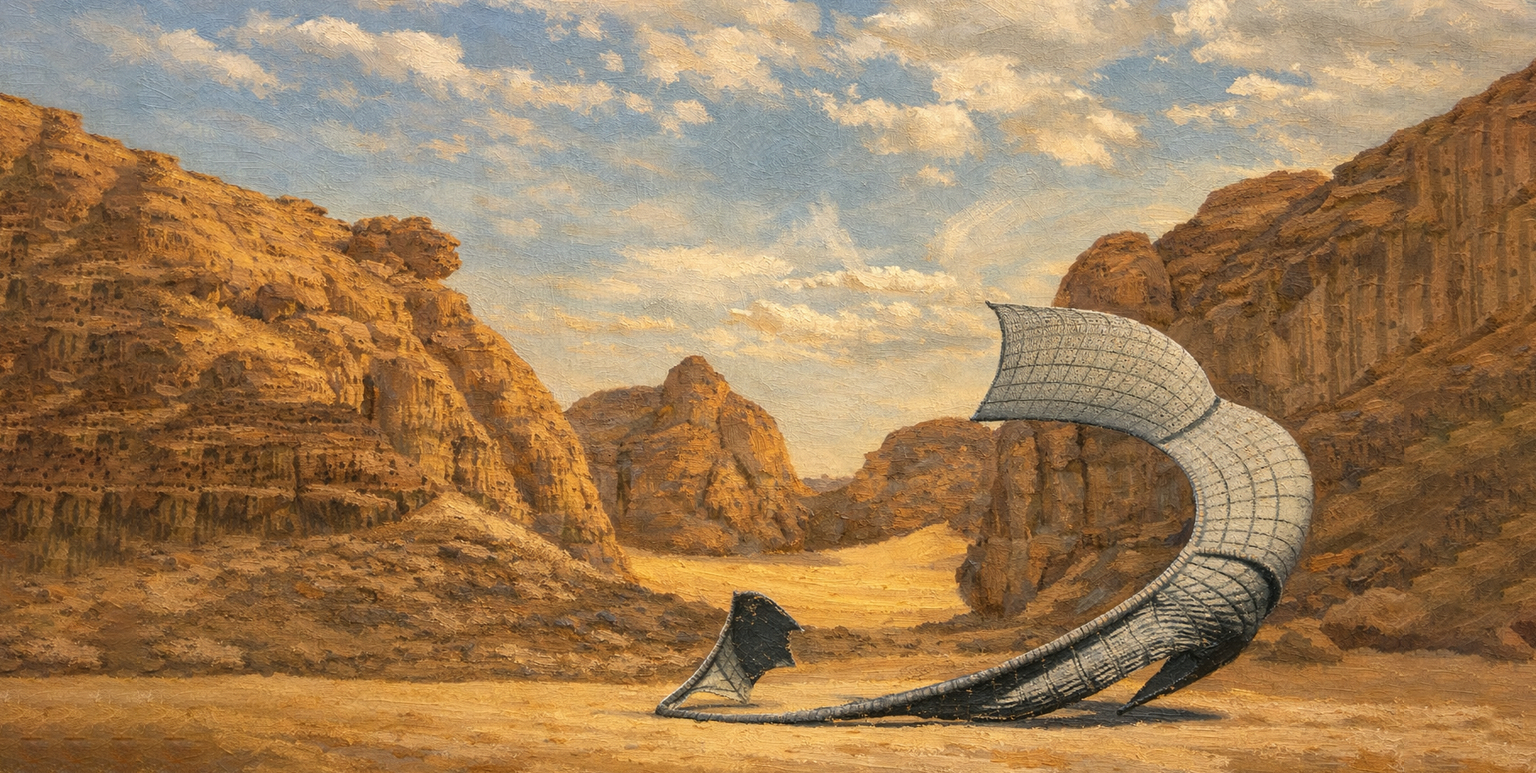
initial state - 2026
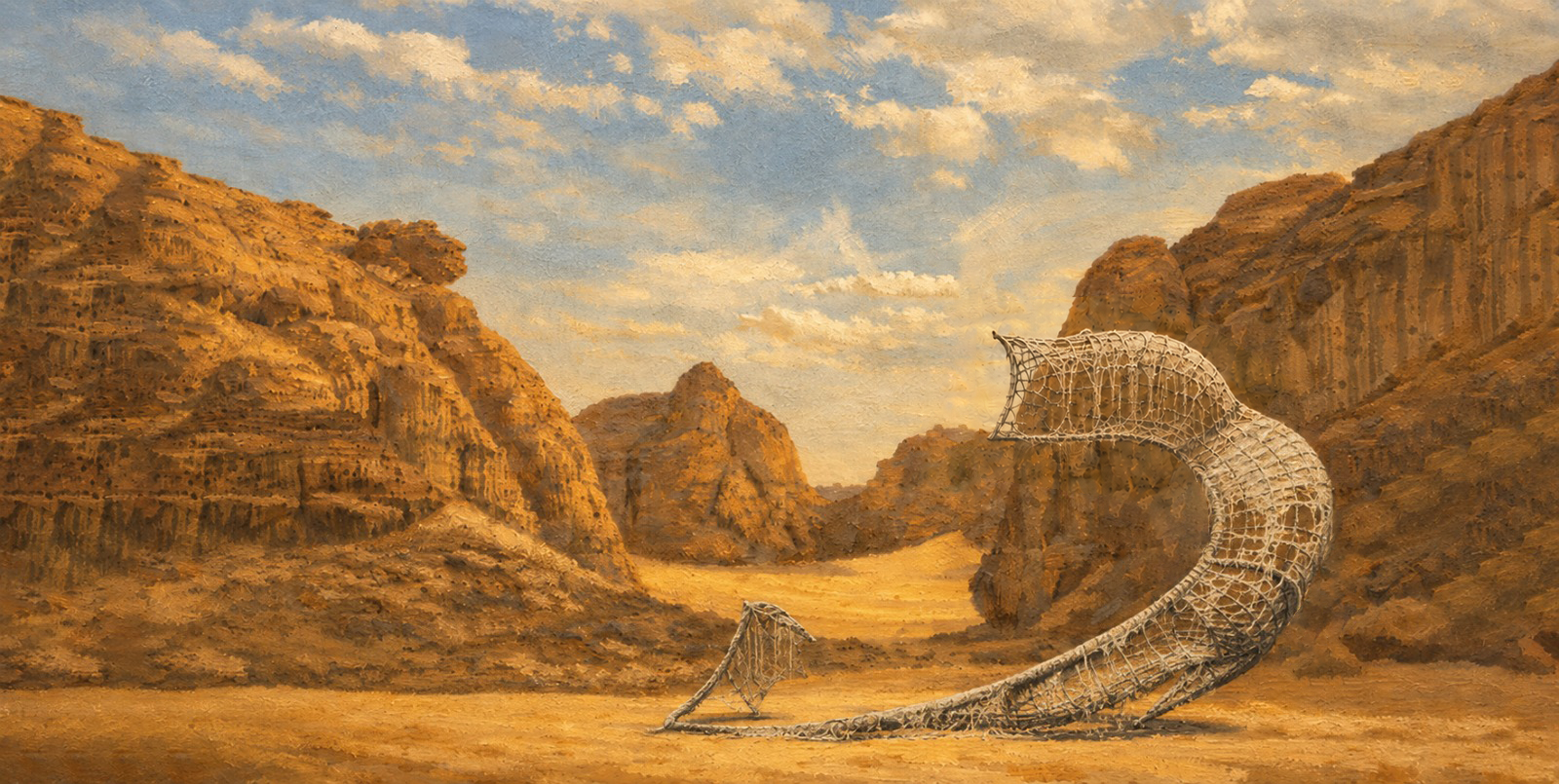
decomposition state - 2027
.. currently cooking up a project / in production
contact
Liliane Herberth
Marco Mayer
send a mail to info@chimaere.com to get more information about upcoming projects, possible collaborations and all questions that might occur during your visit.
acknowledgements
We would like to sincerely thank our lecturers, scientists, and university assistants at TU Wien who supported the realization of this project through their guidance, technical expertise, and assistance throughout the development.
learn more about the ongoing research project flexible mold.
Anna Theresa Pöll, Univ.Lektor Dipl.-Ing.in
Florian Rist, Senior Scientist Arch. Dipl.-Ing.
Marco Palma, Univ.Ass. Dott. mag.
Special thanks to the photographer for documenting the project.
Photos and Videos by Paul Sebesta